
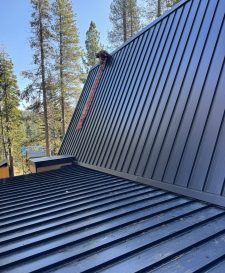
Most siding damage we see in Wesley Chapel and the rest of Pasco County starts small: a cracked panel, a lifted corner, a stain that won't scrub off. If the damage is isolated, the wall behind it is still dry, and the siding is under roughly ten to twelve years old, a targeted repair is usually the right call. If the damage covers a large area, the siding is older, or you find soft wood or moisture when a panel is pulled off, replacement of that wall — or the whole house — is usually the more honest recommendation, even though it costs more up front.
Siding damage around Wesley Chapel, Lutz, Land O' Lakes, and the surrounding communities tends to fall into a handful of repeatable patterns. Knowing which one you're looking at is most of the battle in deciding whether to repair or replace.
The repair-versus-replace decision comes down to a few honest questions: How much of the wall is affected? Is the siding discontinued or faded enough that a patch will be visibly different? And most importantly — when a damaged section comes off, is the sheathing and house wrap behind it still dry and sound, or has water already been getting in? A contractor who only looks at the outside of the panel is guessing. A proper inspection means pulling a sample panel in the damaged area and actually looking at what's underneath before quoting a repair.
| Signal | Usually points to repair | Usually points to replace |
|---|---|---|
| Extent of damage | A few panels, one wall section | Multiple walls, or damage on more than one elevation |
| Siding age | Under roughly 10–12 years | 15+ years, especially if faded or chalky |
| Moisture behind panel | Sheathing dry, house wrap intact | Soft sheathing, staining, or mold behind panels |
| Color/profile match | Panels still available or close enough | Discontinued line or heavy UV fade mismatch |
| Repair cost vs. full re-side | Repair is a small fraction of replacement cost | Repair cost approaches a third or more of a full re-side |
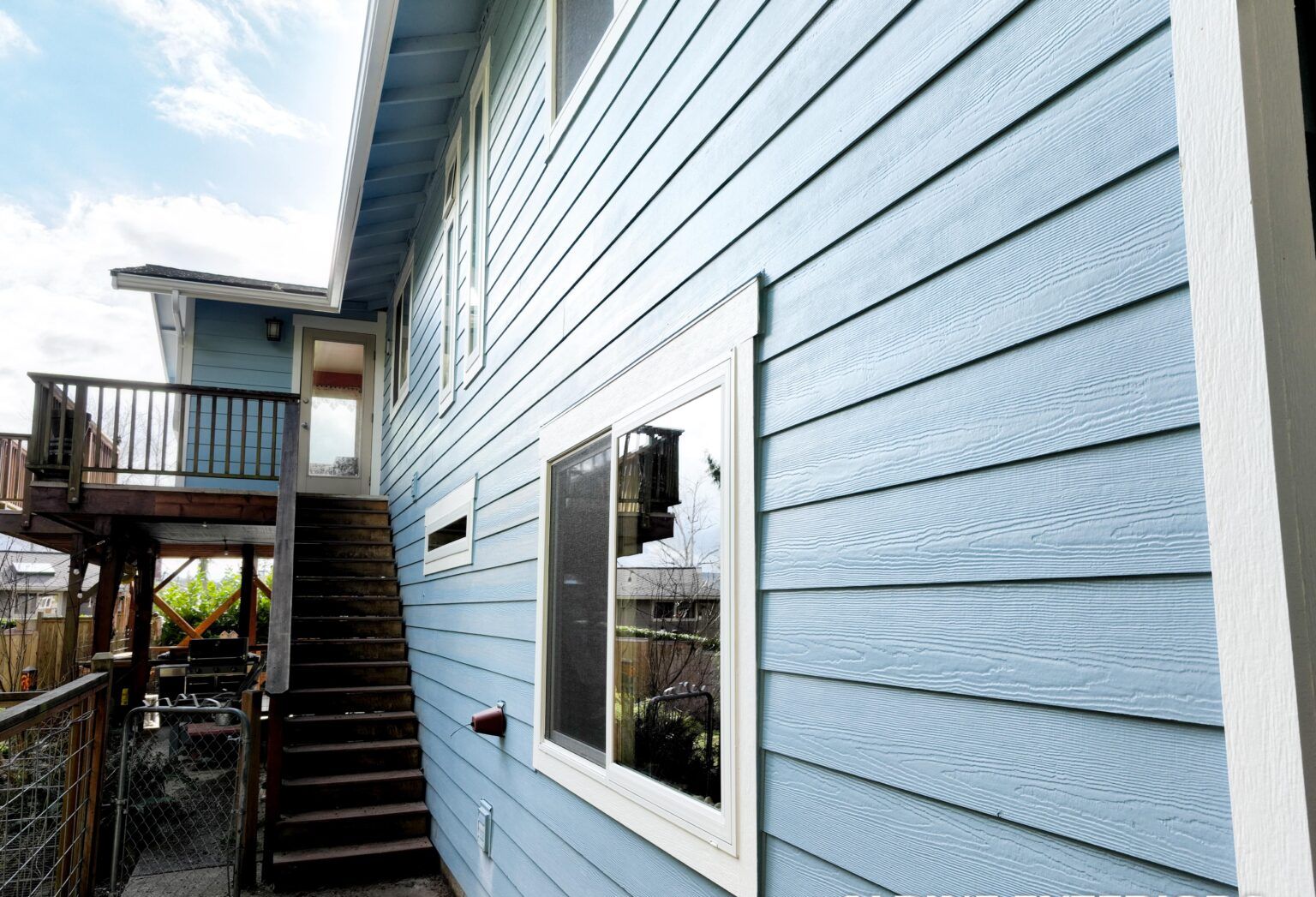
Siding here isn't just cosmetic — it's the first line of defense against a specific set of stresses that inland or northern climates don't deal with in the same combination.
Hurricane wind loads and wind-driven rain. Pasco County sits within Florida's hurricane-prone region under the Florida Building Code, and siding products used here need to carry a current Florida Product Approval for wind and water resistance rather than just a generic national rating. The bigger day-to-day issue isn't usually the wind ripping panels off in a major storm — it's wind-driven rain during tropical systems and strong summer thunderstorms pushing water sideways and upward into any gap, lap, or crack that's already there. A crack that would just look bad in a drier climate becomes an active water entry point here during storm season.
Humidity and mold pressure. Tampa Bay's humidity, combined with near-daily summer rain that doesn't leave much time for surfaces to fully dry, creates steady conditions for mildew and algae growth on siding, especially on shaded north-facing walls and areas under trees. That's mostly a cleaning and maintenance issue on intact siding, but on damaged or improperly sealed siding, the same humidity accelerates rot once moisture gets behind the panel.
Intense UV exposure. Central Florida's sun exposure is significantly harsher, year-round, than most of the country. Vinyl siding chalks, fades, and gets more brittle faster here than it does in a milder climate, which is a big part of why matching a five- or six-year-old panel color exactly is often already difficult, even before you factor in a discontinued product line.
Termites. Subterranean termites are common throughout Pasco and Hillsborough counties, and they don't care whether wood trim is structural or decorative — fascia boards, window trim, and any exposed wood siding accents are all fair game, especially where moisture has already softened the wood. It's not unusual to open up what looked like simple storm damage and find termite activity that had been progressing quietly for a while.
What doesn't apply as directly here, at least for Wesley Chapel and the inland Pasco communities specifically, is salt air corrosion — that's more of a concern for siding and fasteners right along the immediate Gulf coastline. It's worth mentioning only because homeowners moving from coastal properties sometimes ask about it; for most of Pasco County it isn't the driving factor behind siding failure the way wind, rain, humidity, UV, and termites are.
The most useful thing a homeowner can do is separate "this looks bad" from "this is actively letting water in," because those two problems have different urgency and different price tags.
Honestly, patchwork repairs have a real drawback: even a well-done repair on faded or older siding can leave a visible seam between old and new material, and there's no way around that with certain vinyl colors once they've been in the Florida sun for several years. For a wall with scattered damage across most of its surface, replacing that entire elevation — rather than patching six different spots — often ends up looking better and costing less in labor than doing it piecemeal. Alpine Exteriors will tell you when that's the case rather than running up a repair bill on a wall that would be better off re-sided.
Fresh storm damage usually looks sharp — clean cracks, panels pulled loose at the nailing strip, or debris impact marks — and tends to show up right after a specific wind event. Long-term wear looks different: chalky or faded color, brittle panels that crack under light pressure, and staining that's built up gradually rather than appeared overnight. Both can exist on the same house at once, which is why a full inspection rather than a spot check on the obviously damaged panel is worth doing.
Sometimes, but not always, and it's worth being upfront about that before work starts. Vinyl and fiber cement colors fade under Florida's UV exposure, and manufacturers regularly discontinue specific profiles and colors, so a five-year-old panel color may simply no longer be produced. Alpine Exteriors will check current product availability against your existing siding before recommending a spot repair versus a wall-level or whole-house replacement, so you're not surprised by a mismatch after the work is done.
It depends on your specific policy, your deductible, and the cause of the damage, so that's a conversation with your insurance carrier or agent rather than something a contractor can promise. What we can do is document the damage with photos, provide a written repair scope, and help you understand what a wind mitigation inspection reported on your OIR-B1-1802 form implies about your home's siding and fastening — but the coverage decision itself is your insurer's call.
A small, isolated repair — a handful of panels on one wall — can often be completed in a single day once materials are on hand. Larger repairs involving trim, sheathing replacement, or a full wall re-side take longer, generally a few days to a week or more depending on scope. Florida's summer rain pattern can add delays too, since siding work generally needs to pause during active rain, so afternoon thunderstorm season can stretch a project's calendar even when the labor itself is straightforward.
If you're seeing cracked panels, staining, or soft trim on a home in Wesley Chapel, Lutz, Land O' Lakes, New Port Richey, Plant City, Zephyrhills, or elsewhere in the Tampa Bay area, it's worth getting an inspection before deciding between a repair and a full re-side. Alpine Exteriors, Florida contractor license RB29003900, can walk your exterior, check what's happening behind the damaged panels, and give you a straight answer on which approach actually makes sense for your house and your budget — not just the one that's easiest to quote.