
For most homes in Seven Oaks and the surrounding Wesley Chapel area, James Hardie fiber cement siding holds up better against Florida's combination of humidity, intense UV exposure, and wind-driven rain, and it tends to satisfy HOA architectural committees that want a certain look and a certain proof of quality. Vinyl siding is still a reasonable choice for homeowners who want the lowest up-front cost, a faster install, and are comfortable with a shorter service life and more visible weathering over time. Neither option is wrong; the right one depends on your budget, how long you plan to stay in the home, and what your specific street or section of Seven Oaks allows. Alpine Exteriors installs both materials across Tampa Bay and can walk you through which one fits your house, your lot, and your HOA's rules.
James Hardie siding is made from a blend of cement, sand, and cellulose fiber, pressed and cured into planks, shingles, or panels. In the Tampa Bay market it's most commonly installed as HardiePlank lap siding, though HardieShingle and vertical panel profiles show up on accent gables and porch areas in newer Wesley Chapel communities. The material is manufactured to meet Florida Product Approval requirements and carries documented wind and impact ratings, which matters in a county where the Florida Building Code sets a specific design wind speed for new construction and re-siding work.
Fiber cement doesn't burn, doesn't feed termites, and doesn't absorb moisture the way wood-based products do, which is a real advantage given how much rain Pasco County gets during summer thunderstorm season and how quickly humidity can turn into mold or mildew on a shaded wall. Hardie's ColorPlus finish is factory-applied and baked on, so the color resists Florida's UV load better than most field-applied paints, though even ColorPlus finishes will eventually need attention, typically in the 12-to-15-year range depending on sun exposure and how a given elevation faces the afternoon sun. Boards installed without ColorPlus need to be primed and painted after installation and repainted on a normal repaint cycle, similar to any painted exterior surface in this climate.
The tradeoffs are real: fiber cement is heavier and denser than vinyl, so installation takes longer, requires specific fastening patterns to meet wind ratings, and costs more in both material and labor. It also requires cutting with the right tools and dust controls, since fiber cement dust is a respiratory hazard if handled incorrectly. This isn't a material most homeowners install themselves, and it isn't the cheapest option on the table.
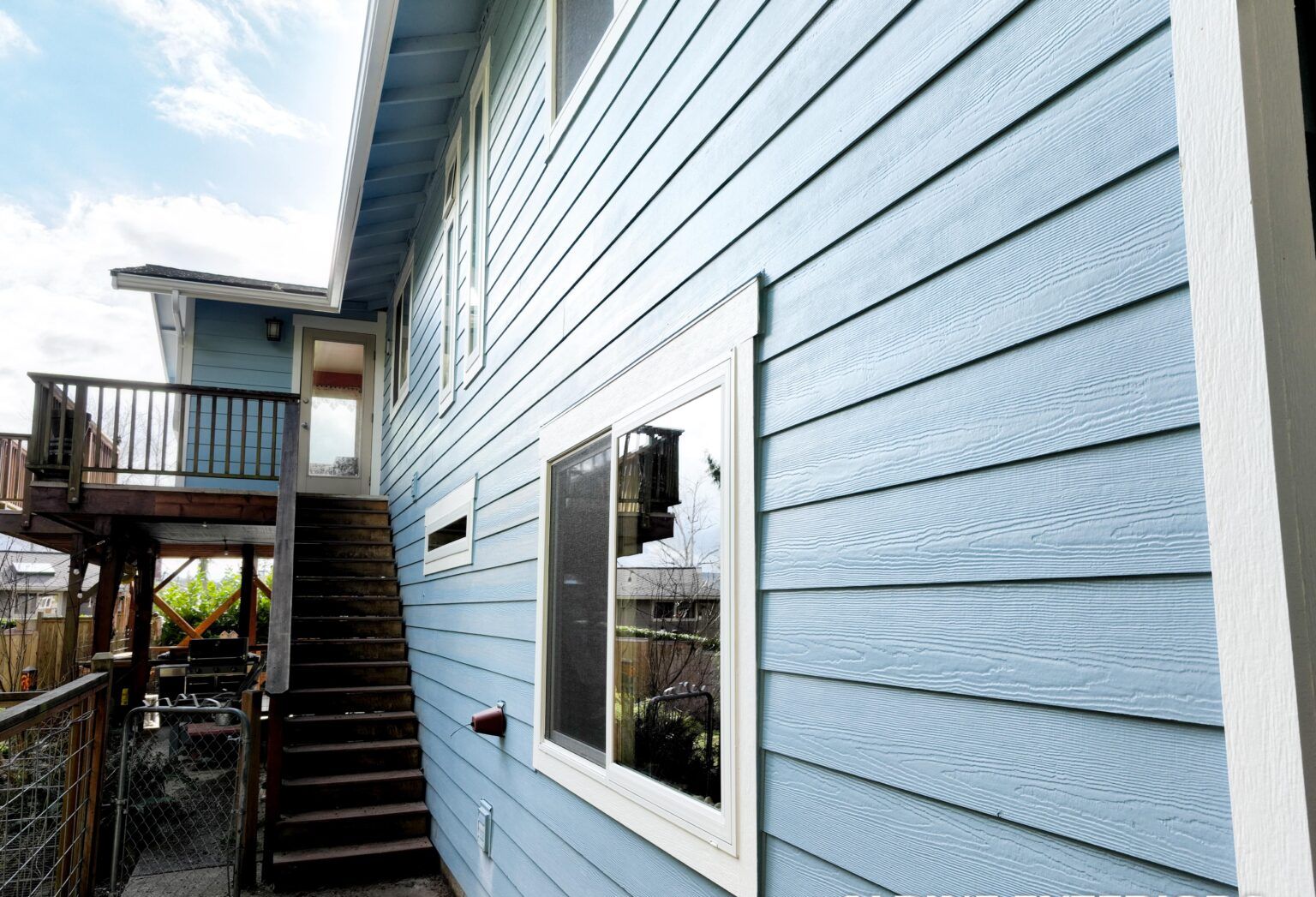
Vinyl siding is an extruded PVC product available in a wide range of colors and profiles, from traditional double-4 lap to Dutch lap and board-and-batten looks. It's lighter than fiber cement, faster to install, and generally the less expensive option up front, which is why it remains common on production-built homes throughout Pasco County, including many original builds in Seven Oaks itself. Modern vinyl siding sold and installed in Florida also has to carry Florida Product Approval documentation, and thicker-gauge panels with a higher wind rating are available specifically for hurricane-prone regions; those upgraded panels and proper nailing patterns matter more here than they would in a low-wind-exposure state.
Vinyl's real weaknesses in this climate show up over time rather than on install day. Dark-colored vinyl absorbs more heat under Florida's sun, which can cause panels to warp, buckle, or distort, especially on walls that get reflected heat off a driveway, pool cage, or neighboring window. Color fading is also more noticeable on vinyl than on a factory-baked fiber cement finish, since UV breaks down the pigment in the plastic itself rather than a separate coating. Thinner, lower-gauge vinyl is also more prone to cracking on impact, whether from a stray lawn tool, hail, or wind-blown debris during a storm, and once a panel cracks it usually needs to be replaced rather than patched. On the plus side, vinyl doesn't rot, doesn't feed termites, and handles routine humidity without the same mold concerns wood siding has, since there's no organic material for mold to feed on directly, though algae and mildew can still grow on the surface film in shaded, humid spots and need occasional washing.
| James Hardie Fiber Cement | Vinyl Siding | |
|---|---|---|
| Installed cost | Higher material and labor cost; commonly runs noticeably more per square foot than vinyl due to weight, cutting time, and fastening requirements | Lower material and labor cost; generally the more budget-friendly option for a full re-side |
| Typical service life | Often 30+ years with proper installation and periodic repainting or ColorPlus touch-up | Often in the 20-to-30-year range, with real-world life on the shorter end in high-heat, high-UV exposures common to Central Florida |
| Maintenance | Periodic washing; repainting every roughly 10-15 years unless ColorPlus finish is used, in which case touch-ups are lighter and less frequent | Periodic washing to remove algae, pollen, and mildew film; no painting, but cracked or warped panels must be replaced, not patched |
| Appearance | Can closely mimic wood grain, shingle, and board-and-batten looks; factory ColorPlus finishes hold color depth well; heavier, more substantial look and sound when tapped | Wide color and profile selection at lower cost; lighter, thinner look up close; dark colors more prone to visible heat distortion over time |
Seven Oaks is a master-planned community, and like most master-planned communities in Wesley Chapel, it comes with an HOA and an architectural review process that governs exterior changes, including siding material, color, and sometimes even the specific product line. Before ordering anything, check your HOA's architectural guidelines or submit a request for approval; some sections favor a particular palette or restrict certain vinyl profiles on street-facing elevations, especially on homes near common areas, ponds, or entry corridors where the community wants a consistent look. This step alone can settle the Hardie-versus-vinyl question for you faster than any cost comparison.
Beyond HOA rules, think about your specific lot. Homes backing up to retention ponds or with heavy tree canopy tend to hold humidity and shade longer through the day, which raises the odds of mildew growth on any siding material and makes the lower-maintenance, mold-resistant profile of fiber cement more appealing on those elevations. Homes with south- or west-facing walls that catch long afternoon sun exposure are the ones most likely to see vinyl warping or color fade over the years, which is worth factoring in if your home has a lot of unshaded wall facing that direction. And because Pasco County falls under a wind speed line that requires documented product approval and specific fastening details under the Florida Building Code, whichever material you choose should be installed by a contractor who pulls the correct permit and installs to the manufacturer's wind-rated specification, not just a generic install pattern.
If you're planning to stay in the home long term and want the lowest lifetime maintenance burden, fiber cement is generally the better fit despite the higher up-front cost. If you're working with a tighter renovation budget, selling within the next several years, or your HOA section already has a strong vinyl precedent on similar homes, vinyl remains a legitimate, code-compliant choice as long as you select a wind-rated panel appropriate for this area rather than a builder-grade minimum. Alpine Exteriors has installed both products throughout Tampa, Wesley Chapel, Lutz, Land O' Lakes, New Port Richey, Plant City, and Zephyrhills, and can look at your specific elevation, HOA packet, and budget before recommending one over the other.
Rules vary by section and have been updated over the years, so there isn't one blanket answer for the whole community. Some streets have architectural guidelines that favor fiber cement or restrict certain vinyl colors and profiles, particularly on front-facing elevations. Always check your specific HOA packet or submit an architectural review request before ordering material, since this can eliminate one option before cost even enters the conversation.
Fiber cement doesn't have organic material for mold to feed on, and its factory-cured surface sheds water well when installed with proper flashing and clearance details. Vinyl also resists rot since it's plastic, but a film of algae or mildew can still form on either material's surface in shaded, humid spots near tree canopy or retention ponds. In practice, both need occasional washing, but fiber cement generally shows less surface staining over a comparable number of years.
James Hardie fiber cement commonly reaches 30 years or more when installed correctly and repainted on a normal cycle, or touched up if it's a ColorPlus finish. Vinyl siding often lasts in the 20-to-30-year range, though intense UV and summer heat in this part of Florida can push some vinyl toward the shorter end of that range, especially darker colors on sun-exposed walls. Actual lifespan for either material depends heavily on installation quality, ventilation behind the siding, and how much direct sun a given elevation gets.
Vinyl siding sold for installation in this part of Florida has to meet Florida Product Approval requirements, and thicker, higher-gauge panels rated for wind-driven rain and wind uplift are available and appropriate for this area. The key is making sure the installer uses a wind-rated panel and the correct fastening pattern for our wind speed zone rather than a lower-grade panel meant for calmer climates. Fiber cement carries its own documented wind ratings and, because of its weight and rigidity, is generally less prone to the panel flutter or uplift that can affect lower-grade vinyl in sustained wind events.
If you're weighing James Hardie against vinyl for a home in Seven Oaks or anywhere else in the Tampa Bay area, the fastest way to get a real answer is an on-site look at your specific walls, sun exposure, and HOA requirements rather than a generic comparison. Alpine Exteriors, Florida contractor license RB29003900, serves Tampa, Wesley Chapel, Lutz, Land O' Lakes, New Port Richey, Plant City, and Zephyrhills, and can provide a written estimate covering both material options so you can compare real numbers for your own house before deciding.