
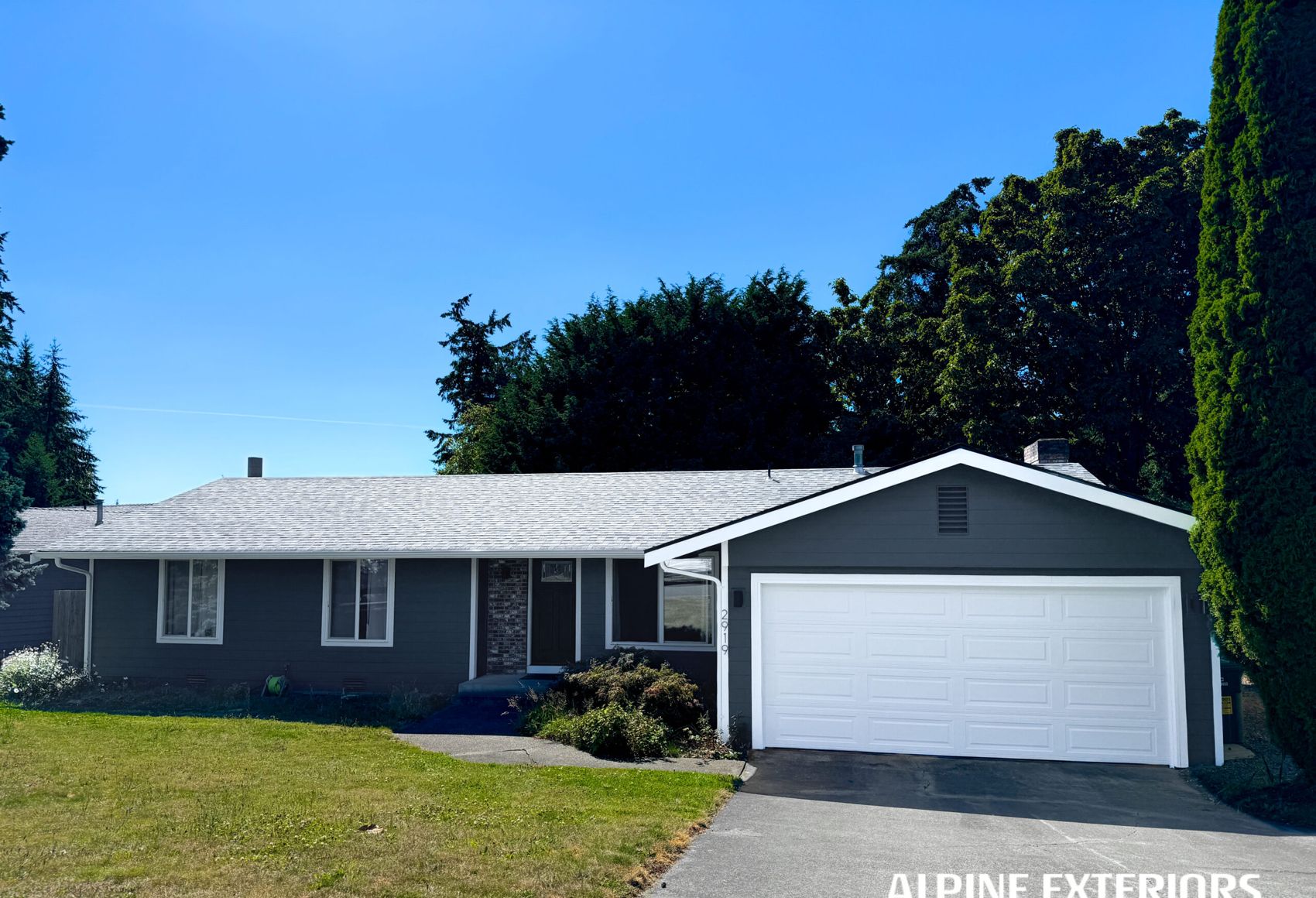
For most homes in Dade City and the rest of inland Pasco County, fiber cement lap siding is the material we recommend most often, with impact-rated vinyl as the honest budget alternative for owners who want lower maintenance and a smaller upfront number. Alpine Exteriors has worked on siding jobs across Tampa Bay, from beachside New Port Richey to inland Dade City and Zephyrhills, and the two environments don't behave the same way on a wall. Dade City sits roughly 25 to 30 miles inland from the Gulf, so salt-laden air isn't the corrosion concern here that it is on the coast. What does hit every Dade City wall equally hard is Central Florida's heat, humidity, heavy wet-season rain, and hurricane-season wind loads, and those are the conditions that should actually drive the decision.
None of these materials is universally "best." Dade City's mix of century-old bungalows near downtown, newer ranch and two-story homes in the surrounding subdivisions, and rural manufactured housing means the right answer depends on the house in front of us. We weighed every option against the conditions that actually determine whether siding here lasts or fails early, rather than what a spec sheet promises.
Fiber cement — the category that includes brands like HardiePlank — is a blend of cement, sand, and cellulose fibers pressed into planks or panels. It's the material we start most conversations with in Dade City, for reasons that hold up under scrutiny rather than marketing.
Pros: it's widely available with Florida Product Approval ratings across a range of wind pressures when installed to the manufacturer's fastening schedule; the cement-based core doesn't feed termites the way solid wood does; it holds factory or field-applied paint well through Florida's UV exposure, typically far longer than wood trim manages; and its density and tight fit against properly flashed sheathing help it resist the wind-driven rain that comes with tropical systems better than lighter materials do.
Cons: it's heavy, so installation labor costs more and mistakes — missed studs, wrong fastener spacing — matter more when they happen; it will still need repainting on a cycle, typically once every decade or so depending on color and sun exposure; it can crack under a hard, direct impact rather than flexing; and the material itself costs more upfront than vinyl. For the wood-frame homes in and around Dade City's historic district, and for owners who want something that still looks right after another decade of Florida summers, this is usually the material we point toward first.
Standard vinyl siding has a mixed reputation in Florida for legitimate reasons, but impact-rated vinyl — thicker-gauge panels engineered and tested for higher wind pressures — is a different product from what's sold at the low end of the market.
Pros: it doesn't rot and doesn't feed termites; it never needs painting; current impact-rated lines carry Florida Product Approval numbers covering the wind speeds mapped for Pasco County; and it's the most affordable option in this comparison by a meaningful margin, both in material and installation labor.
Cons: it's still a plastic product, and Florida's UV load will fade darker colors faster than lighter ones over the years; on a west-facing wall that bakes all afternoon, panels can soften or distort in extreme heat if they weren't hung with the manufacturer's required expansion clearance — a common installation shortcut in this climate, not a flaw in the material itself; and in a direct hit from wind-driven debris during a storm, thinner non-impact vinyl can crack or blow off entirely, which is exactly why the impact-rated grade, and not the bargain grade sometimes sold at big-box stores, is the version worth specifying here.
Insulated vinyl is standard vinyl siding with a rigid foam backing laminated to the panel, and it splits the difference between vinyl and fiber cement in a few useful ways.
Pros: the foam backing adds real stiffness, which helps the panel resist wind pressure and stay flatter against the wall than hollow vinyl does; it adds a modest amount of R-value, which is a genuine plus against Pasco County's summer cooling loads even if it won't transform an electric bill on its own; and it keeps vinyl's low-maintenance, termite-proof, no-repainting advantages.
Cons: it costs noticeably more than standard vinyl, closing some of the price gap with fiber cement without fully closing the durability gap; and if the foam-to-wall detailing isn't handled correctly during installation, humid Florida air can end up trapped between the panel and the sheathing — exactly the kind of moisture problem this climate makes worse, not better.
| Material | Wind / Product Approval | Termite Resistance | Typical Maintenance | Relative Cost |
|---|---|---|---|---|
| Fiber cement | Widely FL-approved when installed to spec | Excellent (cement-based core) | Repaint roughly every 10-15 years | $$$ |
| Impact-rated vinyl | FL-approved for mapped wind speeds | Excellent | Occasional wash, no painting | $ |
| Insulated vinyl | FL-approved, stiffer panel under load | Excellent | Occasional wash, no painting | $$ |
A few materials keep showing up on older Dade City homes or in low-bid quotes, and we'd steer most owners away from them for this specific climate.
Yes. Exterior siding replacement is a permitted alteration under the Florida Building Code, whether the home is inside Dade City limits or in unincorporated Pasco County, and the permitting and inspection process confirms that the installed product matches what its Florida Product Approval actually covers. A licensed contractor — Alpine Exteriors holds Florida contractor license RB29003900 — pulls that permit and handles the inspection as part of the job, which is worth confirming before hiring anyone for siding work in this area.
The Florida Building Code sets design wind pressures based on where a home sits, and every exterior wall covering has to be installed to match its tested and approved rating for those pressures, not just carry a generally reputable brand name. That's why fastener type, fastener spacing, and starter-strip detail matter as much as the material itself — two homes with identical siding can perform very differently in a storm if one was installed to the approved schedule and the other wasn't.
Neither one feeds termites the way solid wood does, since fiber cement is cement-based and vinyl is plastic, so both remove exterior siding as a termite entry point and food source. That said, siding alone isn't a termite treatment — soil-level conditions, moisture around the foundation, and any remaining wood trim or fascia still need their own inspection and treatment plan, especially on older Dade City homes with wood elements close to grade.
With correct installation, fiber cement typically holds up structurally for several decades, though the paint finish will need refreshing periodically. Impact-rated and insulated vinyl typically run in the range of two to four decades before panels start showing UV wear or brittleness, depending on color, sun exposure, and how well the original installation accounted for Florida's heat expansion. In every case, installation detail — flashing, fastening, and expansion clearance — affects real-world lifespan more than the number on a spec sheet.
The right siding for a 1920s bungalow near downtown Dade City isn't automatically the right siding for a newer build out toward Zephyrhills or Wesley Chapel, and a quote that doesn't account for your home's sun exposure, wind exposure, and existing wall condition isn't a complete quote. Alpine Exteriors, Florida license RB29003900, serves Dade City and the rest of Tampa Bay — including Wesley Chapel, Lutz, Land O' Lakes, New Port Richey, Plant City, and Zephyrhills — and can walk your home in person, point out what's actually driving wear on your current siding, and put together options across fiber cement and vinyl with real cost ranges rather than a single number that doesn't survive contact with your house. Reach out for an on-site inspection before your next siding decision.