
Choosing a siding color in Wesley Chapel isn't quite like choosing one anywhere else in the country. Between the intense central Florida sun, the sandy soil and oak-and-palm landscaping that dominates Pasco County yards, the red and barrel-tile roofs common across the area's master-planned communities, and the architectural review boards that oversee most neighborhoods off Bruce B. Downs Boulevard and State Road 54, a color that looks great on a paint chip can still be the wrong choice on your actual house. This guide walks through what we've learned helping homeowners in Wesley Chapel, Lutz, and the surrounding Pasco County communities pick siding colors that hold up and get approved.
For most Wesley Chapel homes, the safest and best-performing choices are warm neutral tones — sand, dune, wheat, or a soft warm gray (sometimes called greige) — with a soft or warm white as a close second. These colors do three things well at once: they reflect rather than absorb Florida's UV load, they read as a natural complement to the clay and concrete tile roofs and native landscaping found throughout Pasco County, and they're the tones most Wesley Chapel homeowners associations already have pre-approved in their design guidelines, which means less back-and-forth before you can even start the project. None of this means darker or bolder colors are off the table entirely — they're covered below with honest tradeoffs — but if you want one answer without reading further, start your search in the warm-neutral family.
We didn't rank these colors on looks alone. Four things matter more here than they would in a milder climate:
We also factor in whether a color choice affects the siding product itself. Any siding installed in this wind zone should carry a valid Florida Product Approval and meet the Florida Building Code's wind load requirements for attachment — that's a product and installation question more than a color one, but a handful of budget vinyl lines only offer their wind-rated versions in a narrow set of colors, which can quietly limit your options if you're not aware of it going in.
These earth-tone neutrals are the most common recommendation we make in Wesley Chapel, and for good reason. They sit comfortably next to the tan and terracotta tile roofs found throughout Pasco County's newer subdivisions, they don't show dust, pollen, or light mildew growth the way true white does, and they're almost always on an HOA's pre-approved list since they're already the dominant palette in most communities out here.
Pros: Excellent UV fade resistance in most quality product lines, blends with the existing roofscape and landscaping, rarely flagged in architectural review, resells well because it reads as neutral and updated rather than trendy.
Cons: It's common — if half the street is already sand or dune, your home won't stand out much. Very light sand tones can look washed out under bright midday sun without contrasting trim or shutters to break it up.
Gray and greige (a gray-beige blend) have become popular across newer Wesley Chapel builds over the past several years, and they photograph and age well in this climate. Mid-tone grays tend to hide pollen dust and light mildew better than pure white while still reading as fresh and current.
Pros: Pairs well with black or bronze window frames and modern roof colors, holds its tone reasonably well under UV compared to some blue-based grays that can shift or look faded sooner, generally well received by HOA committees since it's now a common approved shade.
Cons: Cooler, blue-leaning grays can look slightly out of place next to warm terracotta tile roofs and Florida's green landscaping — a warmer greige usually blends better than a stark charcoal-gray. Very light gray can show water staining after heavy Florida downpours if gutters aren't well maintained.
Not stark, bright white — a warm or slightly creamy white. Done well, this is a classic, timeless look that works on Craftsman and coastal-style homes common in Pasco County's newer neighborhoods.
Pros: Reflects heat effectively, timeless rather than trend-driven, pairs with almost any roof or trim color, generally HOA-friendly.
Cons: This is the color where Florida's humidity shows up first. Mildew, algae streaking, and pollen buildup are more visible on white than on almost any other option, which means more frequent washing to keep it looking good. Bright white can also produce noticeable glare in direct afternoon sun. This is a real maintenance tradeoff, not a dealbreaker, but homeowners should go in expecting to rinse the siding down more often than they would with a warm neutral.
A softer, grayed-down green rather than a bright or saturated one. It's less common than the neutrals above, but it works surprisingly well against Pasco County's oak canopies and palm landscaping, and it tends to hide pollen and light mildew better than white.
Pros: Blends naturally with mature landscaping, distinctive without being loud, hides yellow pine pollen dust reasonably well in spring.
Cons: Not every HOA palette includes green, so this is one worth checking against your community's design guidelines before committing. Cheaper pigment formulations in green tones can shift or fade unevenly under sustained UV exposure faster than neutral tones do — this is a case where paying for a better-rated product line matters more than usual.
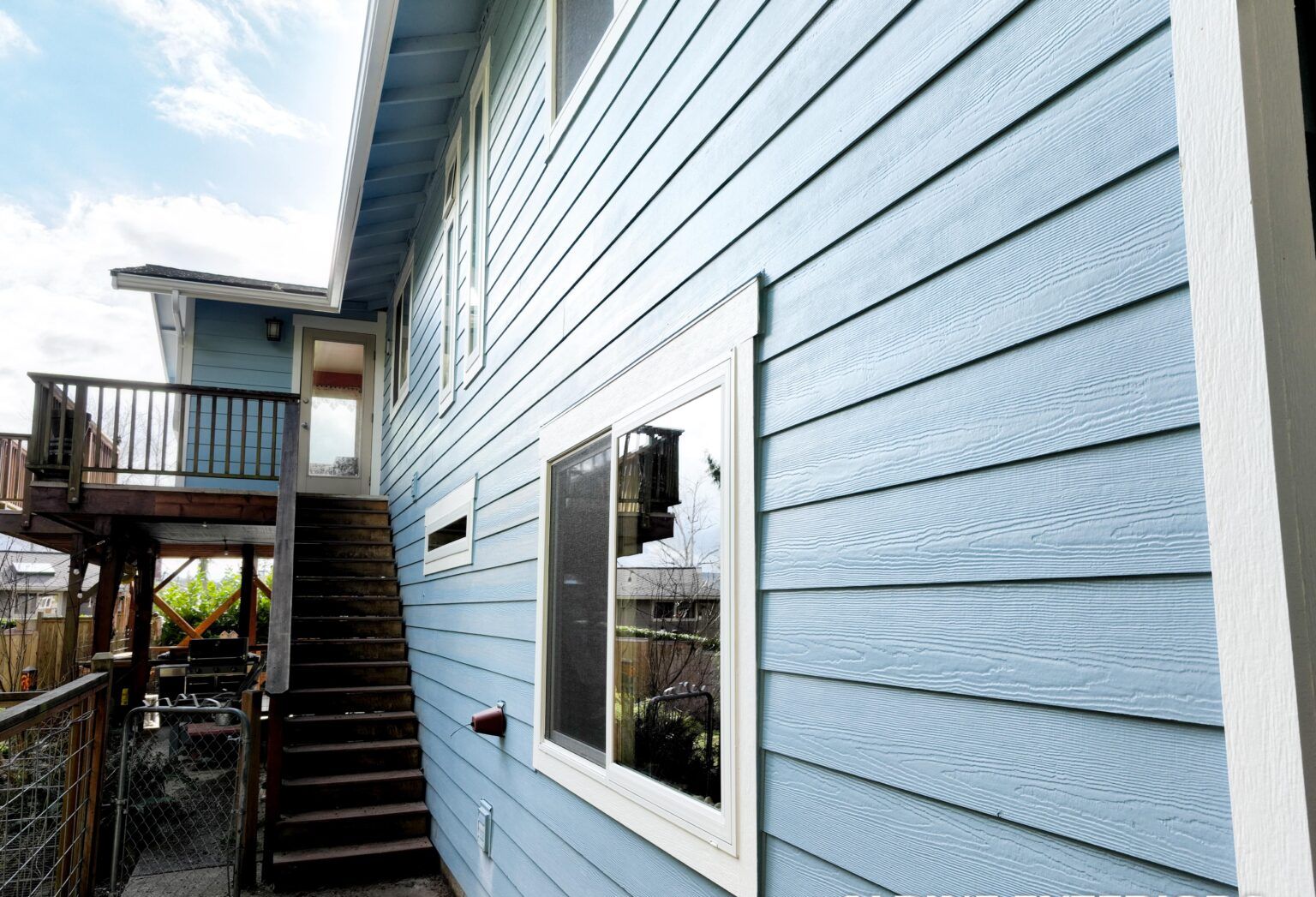
We rarely recommend a deep navy or slate blue as the main field color for a full house here, but as an accent — a front gable, a lower-level wainscot, shutters, or a door surround — it adds contrast that plays well against sand, gray, or white siding and gives a home real curb presence.
Pros: Strong curb appeal as an accent, pairs well with white trim and bronze or black fixtures, doesn't dominate the heat-absorption profile of the whole house since it's a smaller surface area.
Cons: As a full-field color, dark blue absorbs significant heat under Florida's sun, which raises warping risk on vinyl and accelerates UV fading faster than lighter tones. Some HOA guidelines restrict how much of a facade can be a non-neutral accent color, so check the percentage allowed before designing around it.
Dark charcoal has become a popular trend nationally, and it can look sharp on a Wesley Chapel home in small doses — trim, a front door, a garage surround. We're candid with clients that we don't recommend it as a full-house field color in this climate.
Pros: Bold, modern look in small doses; strong contrast against lighter neutrals.
Cons: Dark colors run noticeably hotter under direct Florida sun, and on full elevations that face south or west, that heat load is the single biggest factor behind premature vinyl warping we see in this region. It also fades and chalks faster than lighter tones under sustained UV, meaning a charcoal house often looks visibly duller within a few years compared to a neutral one. Many Wesley Chapel HOAs also cap how dark a primary siding color can be, so this is worth a phone call to your community's management company before you get attached to the idea.
It's common enough that we recommend checking first. Most master-planned communities in Wesley Chapel and the surrounding Pasco County area maintain an approved exterior color palette or require architectural review submission before work begins. Neutral earth tones are rarely an issue; bold, dark, or unusual colors are the ones that most often need a variance or get sent back for revision, which can add weeks to a project timeline if it isn't caught early.
It's a real, well-documented tradeoff rather than an exaggeration. Dark colors absorb more solar heat, and on vinyl siding especially, sustained heat load over a Florida summer can lead to expansion, buckling, or premature fading well before a lighter color would show the same wear. Fiber cement tolerates heat better than vinyl, but darker pigments on any material will still fade faster under central Florida's UV exposure than lighter, earth-tone colors.
It varies by exposure and how much shade and tree cover a wall gets, but homeowners with white or very light siding in humid, shaded areas of Pasco County typically wash it more than once a year to keep mildew and algae staining from building up. Warm neutrals and mid-tone grays tend to show this buildup less obviously, which is part of why they're a lower-maintenance choice, not just a design preference.
Either can work, but in Wesley Chapel specifically, where clay and concrete tile roofs in tan, terracotta, and brown tones are so common, we generally steer homeowners toward siding that complements rather than fights the roof color — a warm neutral, soft gray, or muted green all pair naturally with those roof tones. Strong contrast works best used sparingly, as an accent color on trim, shutters, or a front gable rather than across the whole facade.
Picking a siding color in Wesley Chapel means balancing what you like with what actually performs under Florida sun and humidity, and what your community will approve without a fight. Alpine Exteriors works throughout Wesley Chapel, Lutz, Land O' Lakes, New Port Richey, Plant City, Zephyrhills, and the greater Tampa area, and we're familiar with the HOA palettes and architectural review processes common across Pasco County's neighborhoods. Alpine Exteriors holds Florida contractor license RB29003900, and we can walk your home's exposure, roof color, and HOA guidelines with you before you commit to a shade — reach out to schedule a color consultation and estimate.