
For most homes in Odessa and the surrounding Pasco County communities near Lake Tarpon, Van Dyke Road, and the Suncoast Parkway corridor, fiber cement siding is the strongest all-around match for this area's combination of intense sun, heavy summer humidity, hurricane and tropical storm wind exposure, and a housing stock that ranges from 1980s and 1990s ranch homes on acre-plus lots to newer construction in planned communities like Asturia, Bexley, and the Steiner Ranch-area developments. Insulated vinyl siding is a legitimate second choice when the budget doesn't stretch to fiber cement, particularly on homes where the underlying wall assembly and moisture barrier are already sound. Engineered wood siding is a reasonable third option on new construction, where cut edges and seams can be sealed correctly during installation, but we're more cautious recommending it for remodels of older homes where that installation discipline is harder to control years down the line. We'll walk through the reasoning, plus what to actively avoid, below. As a licensed Florida contractor (RB29003900) working across Tampa Bay — Tampa, Wesley Chapel, Lutz, Land O' Lakes, New Port Richey, Plant City, and Zephyrhills — Alpine Exteriors sees how each of these products actually performs after a few Florida summers and storm seasons, not just how they look on install day.
Odessa sits far enough inland that it isn't dealing with direct salt spray the way a barrier-island property would, but it shares almost everything else that makes siding a harder decision in this part of the state. We weighed each option against the conditions that actually show up here:
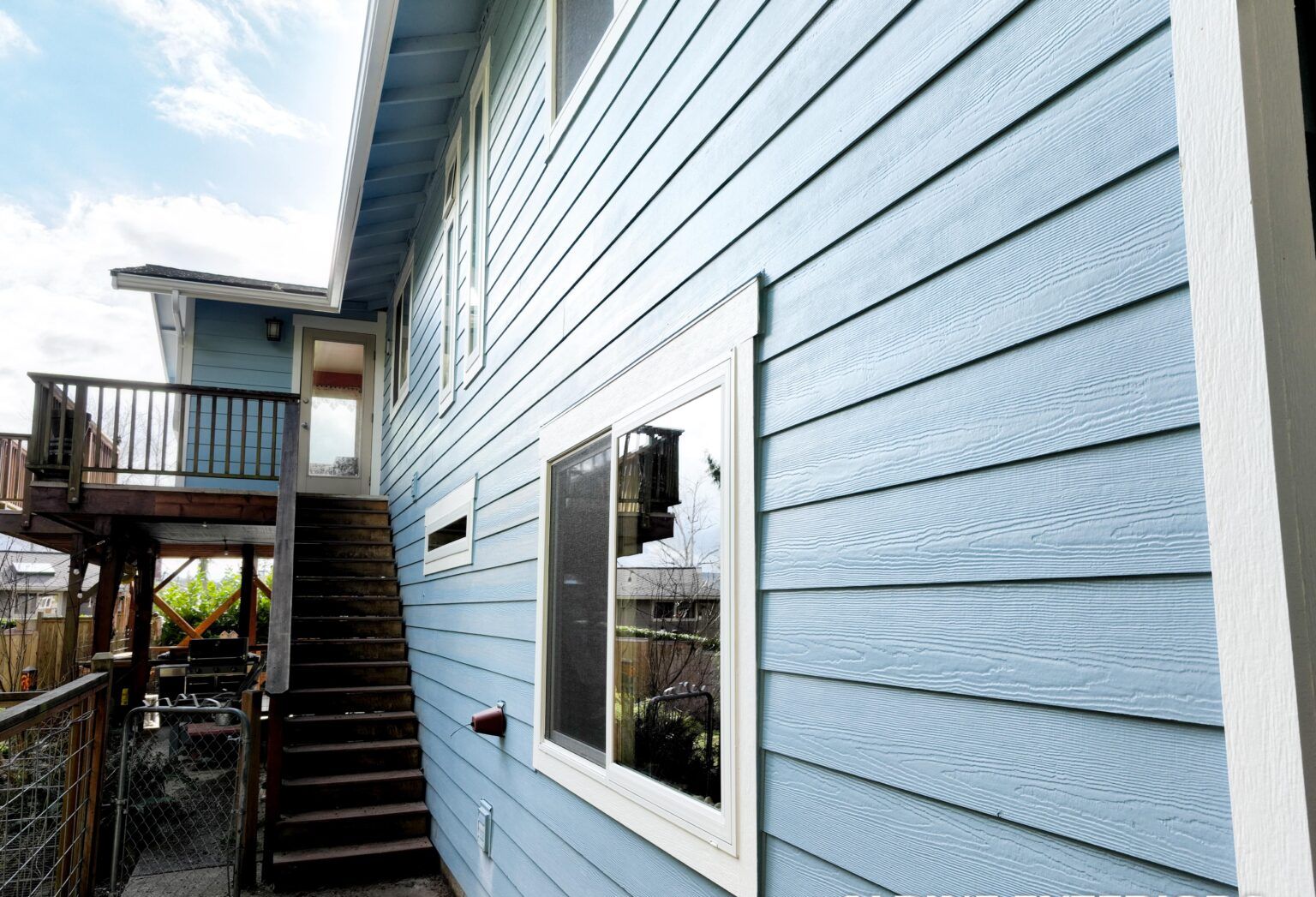
Fiber cement lap and panel siding (the category most homeowners know by the HardiePlank name, though other manufacturers make comparable products) is cement, sand, and cellulose fiber pressed into boards. That composition is what makes it a strong fit here: it doesn't feed termites, it doesn't rot the way wood does, and it holds up under direct Florida sun far better than most vinyl or painted wood. Fiber cement products widely available in this market carry Florida Product Approval ratings that cover the wind pressures typical of Pasco County construction, and the boards themselves have real mass and rigidity, which helps them resist wind-driven debris during storm season better than lighter cladding.
The honest drawbacks: fiber cement is heavy, which makes installation more labor-intensive and less forgiving of a rushed crew — a fastening schedule that's too sparse or placed incorrectly is one of the more common ways this product underperforms its rating in the field. It costs more up front than vinyl, typically running toward the higher end of siding budgets once trim and paint are included. It also isn't maintenance-free: caulking at joints and repainting on a multi-year cycle are part of owning it in a climate with this much UV and humidity, even though the boards themselves arrive pre-finished or factory-primed. And cutting it on site generates silica dust, which any reputable crew should be managing with proper tools and precautions rather than dry-cutting freehand.
Insulated vinyl siding — vinyl panels with a rigid foam backing laminated to them — is a step up from hollow-back vinyl and a reasonable choice for Odessa homeowners who want low maintenance at a lower price point than fiber cement. The foam backing adds some rigidity and impact resistance compared to standard vinyl, helps panels sit flatter against the wall, and gives termites and mold nothing organic to work with. Installed correctly with the manufacturer's specified fastener spacing, insulated vinyl products in the higher wind-rated lines carry Florida Product Approvals suitable for this area.
Where it falls short: even insulated vinyl can fade and chalk over time under Florida's UV load, especially in darker color choices, which absorb more heat and tend to show fading sooner than lighter tones. It's less impact-resistant than fiber cement against wind-driven debris in a serious storm. And vinyl's performance is only as good as its seams and flashing — if those details get cut corners on, wind-driven rain during Tampa Bay's summer storms will find its way behind the panels regardless of how the product itself is rated.
Engineered wood siding (the category most homeowners recognize by the LP SmartSide name) is wood strand material treated with resins and zinc borate to resist moisture and termites better than raw lumber. It's lighter than fiber cement, generally easier and faster to install, and carries wind ratings suitable for this region when properly fastened.
Our hesitation is specific: it's still a wood-based product, which means every cut end and every seam has to be sealed at installation and re-sealed as part of ongoing maintenance, or moisture will eventually find its way into the substrate in a climate as humid as Odessa's. It also has a shorter track record in Gulf Coast conditions than fiber cement, which has decades of performance history in Florida specifically. We'll spec it on new builds where we control every detail of installation from the start, but we're more conservative about recommending it as a full re-side on an older home where we're working around existing conditions we didn't create.
Two older options still show up on Odessa's larger, older lots and are worth addressing honestly. Natural wood lap siding, unless it's an old-growth product installed decades ago and meticulously maintained, is a poor match for this climate — Pasco County's termite pressure and year-round humidity work against it constantly, and repainting cycles here run shorter and more expensive than most manufacturers' care guides assume. Aluminum siding, still present on some 1970s-80s homes in the area, is termite-proof and won't burn, but it dents from hail and windborne debris, fades and chalks visibly over time, and the pool of skilled aluminum installers and matching replacement panels has shrunk enough that repairs can be harder to source than for either fiber cement or vinyl.
Impact ratings are most commonly discussed for windows and doors, but siding carries its own separate requirement: a valid Florida Product Approval for the wind pressures and exposure category that apply to your specific home under the Florida Building Code. That's a different standard than window impact ratings, and it's worth asking any contractor to show you the approval documentation for the exact product and fastening pattern they plan to use, not just a general brand reputation.
Siding itself isn't a line item on the standard wind mitigation inspection form (OIR-B1-1802) the way roof shape, roof-to-wall connections, and opening protection are, so re-siding alone typically won't change that discount. That said, if a siding project is part of a larger exterior renovation that touches roof-to-wall attachments or opening protection, it's worth having those items re-verified and documented afterward, since that paperwork is what your insurer actually uses to calculate the discount.
It depends heavily on the size of the home, the existing wall condition, and how much repair or moisture damage turns up once the old siding comes off — which is more common on older ranch homes with mature landscaping that's kept walls shaded and damp for years. A straightforward re-side on an average home is often measured in days to a couple of weeks; a home needing substrate repair, new house wrap, or flashing corrections will take longer, and any honest contractor should only give you that range after seeing the walls in person.
Not without the right furring and moisture-management details in between. Many Odessa homes are concrete block (CBS) construction with a stucco finish, and siding installed directly against that assembly without a proper drainage gap and vapor-permeable barrier can trap moisture rather than let it escape, which works against you in a humid climate. The right approach depends on the specific wall assembly, which is something we evaluate on site rather than assume from the home's age or style.
Every property on Odessa's larger lots, wooded parcels, and mixed housing stock carries its own combination of sun exposure, shade, wall construction, and wind exposure, and that combination is what should actually drive a siding recommendation — not a single product pushed as the right answer for every house in Pasco County. Alpine Exteriors is a licensed Florida contractor (RB29003900) serving Odessa and the rest of Tampa Bay, including Tampa, Wesley Chapel, Lutz, Land O' Lakes, New Port Richey, Plant City, and Zephyrhills. If you'd like a walk-through of your home's current siding, wall assembly, and which of these options actually fits your situation and budget, reach out to Alpine Exteriors for an on-site assessment before you commit to a product.