
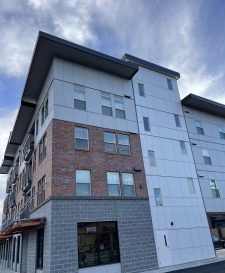
Properly installed James Hardie fiber cement siding typically lasts 30 to 50 years on a Tampa Bay home, and many installations are still performing well past that when the substrate and flashing underneath stay dry. The range is wide on purpose: how long Hardie siding last in Florida is less a function of the product itself and more a function of how it was installed, how it was painted, and how consistently a homeowner deals with small problems before they become big ones.
That's a genuinely different answer than you'd get for vinyl siding or untreated wood siding in this climate, both of which tend to show their age within 15 to 25 years under Tampa Bay's sun and humidity. It's also a more honest answer than a flat "50 years" marketing number, because we've seen Hardie board replaced on homes younger than that where a roofer's flashing detail failed and water sat behind the panels for years without anyone noticing.
James Hardie fiber cement is manufactured from a mix of cement, sand, and cellulose fiber, cured under pressure into a rigid board that doesn't rely on paint alone to keep water out — the material itself is dimensionally stable and largely indifferent to the moisture swings that wreck wood siding. In Florida specifically, James Hardie's own engineering data and product literature point to a 30-to-50-year service life as typical, with the low end reflecting harsher exposure (full-sun coastal walls, minimal upkeep) and the high end reflecting a well-maintained, well-flashed installation on a shaded or moderately exposed elevation. We tell Tampa Bay homeowners to plan around the middle of that range and treat anything beyond it as a bonus, not a promise.
It's worth separating "lifespan of the board" from "lifespan of the paint job." The cement-sand-cellulose panel itself doesn't rot, and it isn't a food source for termites the way wood siding is — that matters in a region where termite pressure is a routine part of home maintenance. What does age is the finish on top of it, whether that's a factory ColorPlus finish or field-applied paint. That distinction matters more in Tampa than in most of the country, because UV intensity here is genuinely higher than the national average, and the finish is what's absorbing that dose year after year.
James Hardie backs its lap and panel products with a limited, non-prorated warranty — commonly a 30-year term on the substrate for the plank products used on most homes, with a separate, shorter warranty on ColorPlus factory finish (paint and color retention) that runs for a decade or more depending on the product line. What the warranty actually covers is manufacturing defects in the board itself: cracking, warping, or a finish that fails to perform as specified when the product was made correctly and installed to Hardie's published instructions.
What it doesn't cover matters more in practice. Installation errors — panels nailed too tight, missing kick-out flashing, insufficient clearance to grade or roofing, caulk used where a Hardie detail calls for none — are excluded, and they're also the single most common reason siding fails early in this region. The warranty is also not automatically transferable in full to a second owner in every case, and it typically requires the installer to have followed Hardie's fastening and clearance specifications to the letter. If a homeowner ever needs to file a claim, the paperwork trail proving proper installation is what determines whether that claim gets paid — which is the honest answer to what the warranty actually covers on paper versus what a homeowner can realistically collect on when something goes wrong.
Four things separate a Hardie installation that's still crisp at 45 years from one that needs panel replacement at 18:
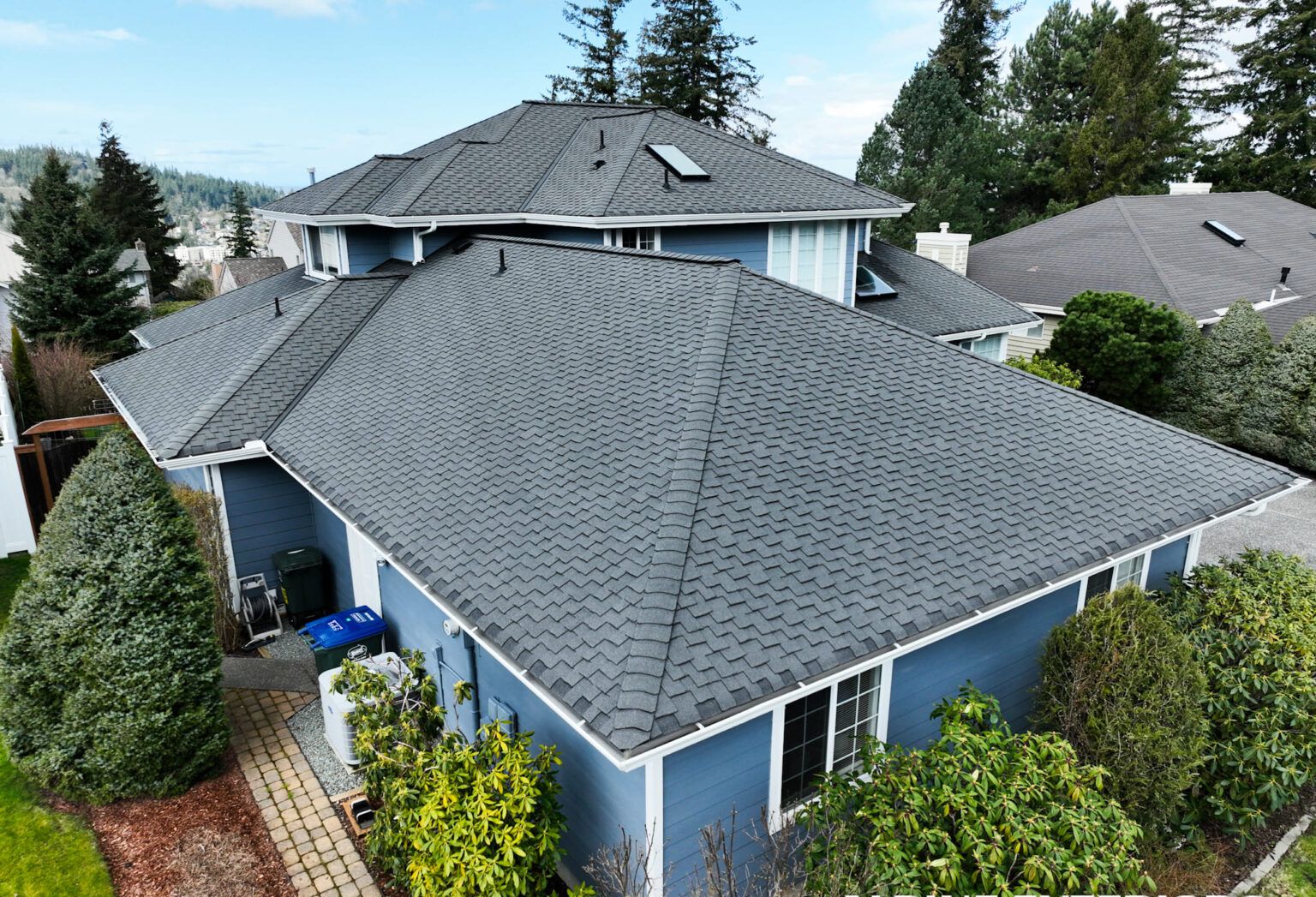
James Hardie engineers its siding formulations by climate zone, and Florida falls within the company's most demanding designation for heat, humidity, and moisture exposure — often marketed as the HZ10 formulation. The practical difference from a "standard" Hardie fiber product isn't cosmetic: the HZ10 mix is engineered to resist moisture-related expansion and to tolerate the freeze-thaw-free, high-humidity cycle that defines a Gulf Coast climate, rather than the wet-then-dry seasonal swing common further north. Tampa Bay homeowners planning stay-put ownership rather than a quick flip get the most value from this — it's a product built specifically for the conditions on your wall, not a generic siding pulled off a national spec sheet.
The durability case for hardie fiber cement in this climate comes down to what the material is made of and what it isn't. Cement, sand, and cellulose fiber don't provide the food source that makes wood siding attractive to termites and fungal decay, which matters in a region where subterranean and drywood termites are both active year-round. The board also doesn't expand and contract nearly as much as vinyl does across a Tampa summer day, so it holds paint lines, caulk joints, and trim reveals tighter over time. And because it's essentially inert to moisture the way wood is not — it doesn't swell, cup, or rot from humidity the way untreated lumber does — the everyday humidity load in Tampa Bay, which runs well above the national average for most of the year, isn't degrading the board the way it degrades other materials.
Day to day, Hardie board on a Tampa Bay home is absorbing near-constant UV exposure, cycling through humidity swings from 90%+ mornings to drier afternoons, taking wind-driven rain during summer storms, and — for homes within several miles of the Gulf or Tampa Bay itself — some amount of coastal salt air on top of all of that. None of those individually threaten a properly installed board. What they do is stress the weak points: fastener heads, cut edges that weren't sealed at installation, caulk joints, and the finish coat. That's why the honest lifespan conversation isn't really "does the board survive Florida" — it does — but "how well were the details around the board executed, and how consistently will they be maintained."
Fiber cement siding, including James Hardie's lap and panel products, carries Florida Product Approval for use in high-velocity wind zones when installed per the approved fastening schedule, and Hardie products are commonly specified on homes built to meet current Florida Building Code wind-load requirements. In practical terms, correctly installed Hardie siding is rated to hold up to the wind pressures the code requires for your specific wind zone and exposure category — it isn't a decorative product bolted onto a code-minimum wall, it's part of the assembly the code accounts for.
The bigger real-world risk in a hurricane isn't the siding blowing off a wall that was fastened correctly — it's wind-driven rain finding a gap, or windborne debris impacting the wall directly. Fiber cement resists impact better than vinyl and doesn't absorb water the way exposed wood trim does, but no siding product is impact-proof against debris traveling at hurricane windspeed. What Hardie reliably delivers after a storm is a board that dries out and keeps performing, rather than one that has to be torn off because it delaminated, warped, or fed mold growth after getting soaked.
If there's one variable that determines whether a Tampa Bay homeowner gets 25 years out of Hardie siding or 50, it's installation quality, not the siding itself. Hardie siding installation follows a published, detailed spec — fastener type and spacing, minimum clearances, joint treatment, flashing sequencing — and it's a different skill set than installing vinyl or wood. A crew that's fast with vinyl but unfamiliar with fiber cement's specific requirements tends to make the same handful of mistakes: nailing too tight (which restricts the board's minor expansion and can cause cracking at the fastener), skipping or under-sizing flashing at trim and window heads, and caulking butt joints that Hardie's spec says should be left with a gap and covered, not sealed solid. None of those mistakes are visible on day one — they show up as cracking, staining, or rot at the sheathing five to ten years later. This is why a manufacturer's warranty and a contractor's installation workmanship are two separate things worth asking about before signing anything, and it's the standard Alpine Exteriors holds every Hardie siding installation to under our Florida contractor license (RB29003900).
Hardie siding is genuinely low-maintenance compared to wood, but "low-maintenance" doesn't mean "zero-maintenance," and Tampa's climate has its own specific list:
None of this is a full weekend project. It's roughly the same effort as maintaining gutters or a roof — periodic attention that's cheap compared to the cost of a problem left unaddressed.
The homeowners who get the most out of their Hardie siding investment tend to do three things: they hire an installer who can show completed Hardie work and speak specifically to Florida clearance and flashing details, not just a general remodeling résumé; they choose ColorPlus factory finish over field paint where the color selection allows it, because a factory finish baked on under controlled conditions simply outperforms brush-applied paint in UV and humidity; and they treat the first year after installation as a check-in period, walking the exterior after the first heavy summer storm season to confirm caulk and flashing are performing as expected. None of that is expensive — it's attention, and it's the difference between a 30-year outcome and a 50-year one on the same product.
Vinyl siding is the lowest-cost option and it's not a bad product in the right application, but Tampa's climate finds its weak points faster than milder climates do. Vinyl expands and contracts significantly with temperature swings — it expands and contracts more per degree than fiber cement does — which is why vinyl installations use loose-hung panels rather than face-nailing tight. In intense, sustained Florida sun, that constant cycling accelerates the plastic's aging, and darker vinyl colors can warp or sag over time from heat absorption alone. Vinyl also becomes more brittle with UV exposure over the years, making it more prone to cracking on impact — a real consideration in a region with hail-producing summer storms and hurricane debris risk. Most vinyl siding in this climate is realistically a 15-to-25-year product before fading, warping, or cracking becomes noticeable enough to prompt replacement.
Wood siding in Tampa's climate faces the toughest combination of threats of any common material: high humidity that promotes rot and mold, near-constant moisture exposure during the wet season, and termite pressure that's a routine, ongoing concern for Florida homeowners rather than an occasional risk. Even with regular painting and sealing, wood siding in this region typically needs repainting every 3 to 7 years and is prone to rot at joints, sills, and anywhere water collects, with a realistic service life in the 15-to-25-year range before major sections need replacement — often sooner on unshaded or coastal-facing walls. It can look beautiful, and some homeowners choose it for that reason alone, but it's the highest-maintenance of the three materials by a wide margin in this specific climate.
Stucco is common on Tampa Bay homes and, applied correctly over the right substrate, holds up reasonably well structurally — it doesn't burn, and it resists pests. Its weak point in Florida is cracking: the same humidity and thermal cycling that stresses siding also stresses stucco's rigid cement coating, and once hairline cracks form, wind-driven rain during storms can drive water behind the finish, leading to hidden moisture damage at the sheathing that isn't visible from outside until it's advanced. Stucco repair is also more disruptive and typically more expensive than a siding repair, since matching texture and color on a patch is difficult and often requires refinishing a full wall section rather than a few boards. Well-maintained stucco can last several decades, but "well-maintained" here specifically means prompt crack repair — deferred maintenance is where stucco fails.
Upfront price only tells part of the story. Spreading installed cost across realistic service life gives a clearer picture of what each material actually costs a Tampa Bay homeowner over time. These are planning ranges, not quotes — actual pricing depends on the home's size, trim complexity, and current condition of the substrate.
| Material | Typical installed cost range | Realistic Tampa Bay lifespan | Rough cost-per-year (before maintenance) |
|---|---|---|---|
| James Hardie fiber cement | $9–$16 per sq. ft. | 30–50 years | Lowest to moderate |
| Vinyl siding | $4–$9 per sq. ft. | 15–25 years | Moderate — replaced more often |
| Wood siding | $7–$14 per sq. ft. plus ongoing repainting | 15–25 years | Highest — repainting adds up fast |
| Stucco | $6–$12 per sq. ft. | 20–40 years if crack-maintained | Moderate — repair costs vary widely |
James Hardie siding is worth evaluating on cost-per-year rather than sticker price alone, because a product that lasts twice as long as vinyl for roughly double the upfront cost isn't more expensive over the ownership period — it's close to a wash, and it comes with less maintenance and fewer replacement disruptions along the way. Where Hardie pulls further ahead is in avoided costs that don't show up in a per-square-foot number: fewer repaint cycles than wood, less risk of the hidden water damage that drives expensive stucco and wood repairs, and a Florida Product Approval rating that matters if you ever need to document the exterior for insurance purposes after a storm.
For homeowners planning stay in their Tampa Bay home for more than 8 to 10 years, James Hardie fiber cement is worth the investment for most: it's the material best matched to this region's combination of UV, humidity, termite pressure, and hurricane wind-load requirements, and its total cost of ownership compares favorably to the alternatives once you account for repainting, repair, and replacement cycles. For a shorter hold — flipping a property or covering a small addition on a tight budget — the higher upfront cost is harder to justify, and a well-installed vinyl or a stucco patch may make more financial sense for that situation. There's no universal right answer; there's a right answer for your timeline, your home's exposure, and your budget, and that's a conversation worth having with an installer before committing either way.
All exterior finishes lose some color intensity over years of direct Florida UV exposure, but ColorPlus factory finish is engineered specifically to resist fading far longer than field-applied paint, and it's backed by its own finish warranty separate from the substrate warranty. Field-painted Hardie board will fade and chalk on roughly the same timeline as any quality exterior paint — typically needing a repaint somewhere in the 7-to-12-year range on unshaded, Tampa-facing walls, sooner on the harshest exposures.
For most homeowners planning to stay put, yes — the combination of termite resistance, minimal expansion and contraction, Florida Product Approval for wind zones, and a realistic 30-to-50-year lifespan means the higher upfront cost is spread across a much longer, lower-maintenance ownership period than vinyl or wood offers. It's a weaker case financially for a short hold or a strict rock-bottom budget, where a lower-cost material may pencil out better for that specific timeline.
No — it requires periodic maintenance, not constant maintenance. An annual rinse, a caulk-joint inspection, watching for fade on the harshest-exposed walls, and a post-storm walk-around cover the realistic list for a Tampa Bay home. That's meaningfully less than wood siding demands and comparable to, or less than, what stucco needs once you factor in crack monitoring.
Correctly installed Hardie siding carries Florida Product Approval for high-velocity wind zones and is commonly specified to meet current Florida Building Code wind-load requirements for the home's specific wind zone and exposure category. It holds up well to sustained wind and wind-driven rain when the fastening schedule was followed; no siding product, Hardie included, is rated as impact-proof against direct windborne debris strikes.
If you're weighing how long Hardie siding will actually last on your specific home — or comparing it honestly against vinyl, wood, or a stucco repair — Alpine Exteriors will walk your exterior with you, point out the flashing and clearance details that matter most in this climate, and give you a straight answer about what your home's exposure and timeline actually call for. We serve Tampa, Wesley Chapel, Lutz, Land O' Lakes, New Port Richey, Plant City, and Zephyrhills, and every hardie siding installation we do follows James Hardie's published fastening and clearance specs to the letter — not because it's required, but because it's the difference between a 20-year outcome and a 45-year one on the same board. Reach out for a walk-through and a written estimate, with no pressure to sign on the spot.
Every Tampa Bay home carries its own mix of sun exposure, storm history, and existing substrate condition, so we don't quote Hardie installations off a generic price list. We look at your walls, your roofline flashing, and your home's specific wind exposure before recommending a scope of work, and we're upfront when a smaller repair makes more sense than a full re-side.
Whether you're deciding between Hardie siding and a stucco repair, trying to understand what your existing siding warranty actually covers, or just want a second opinion on a quote from another contractor, Alpine Exteriors (FL license RB29003900) is happy to talk through the specifics of your home before you commit to anything.