
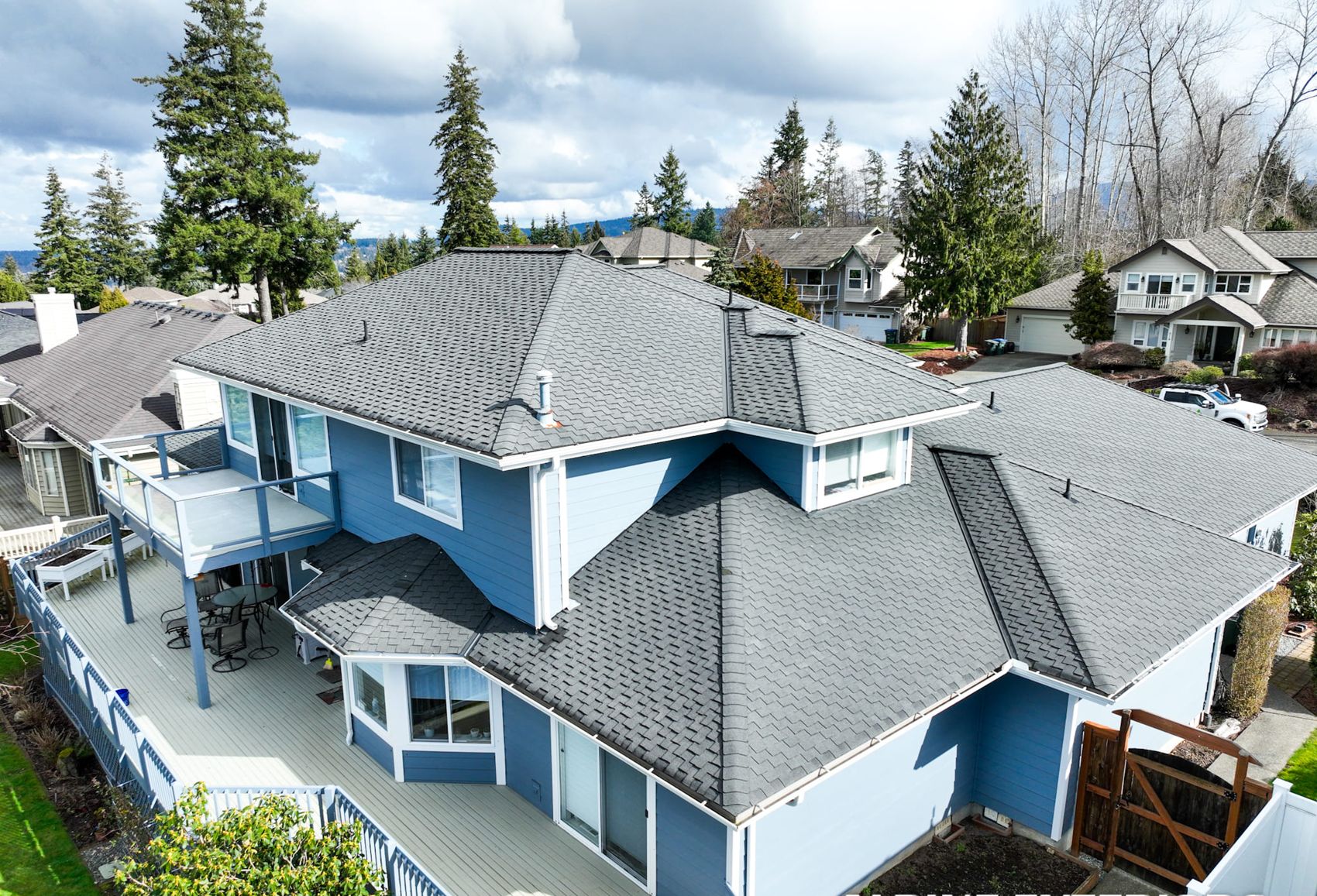
After a storm passes through Keystone, the fastest way to tell if your siding needs attention is to walk the full exterior and look for lifted panels, cracked or missing pieces, and soft spots near trim, corners, and window edges — damage that often starts small and gets worse with the next rain rather than staying put. If you spot any of that, or a strong wind event just moved through northwest Hillsborough County, get it inspected before you file an insurance claim or start repairs, because what looks like a cosmetic ding on the surface is often a sign that moisture is already working behind the panel where you can't see it.
Keystone sits inland in northwest Hillsborough County, away from the open water of Tampa Bay itself, but it's still squarely inside the path of every tropical system, squall line, and summer thunderstorm cell that crosses this part of Florida. The damage to siding is rarely one dramatic event — it's almost always the combination of wind pressure and driving rain acting on the same wall at the same time, over and over across a hurricane season.
Wind doesn't only push against a wall; it also pulls. As gusts move over a roofline and down a wall face, they create negative pressure — suction — on corners and leeward sections of the house. That suction is what lifts a panel's bottom edge away from the wall, works the fasteners loose in their slots, and eventually pops a panel free. Once one panel starts working loose, the panels locked into it lose some of their interlock and become easier to pull loose the next time wind hits, which is why storm damage on a wall tends to spread outward from one starting point rather than stay isolated.
At the same time, sustained wind pushes rain sideways instead of letting it fall straight down. Siding is designed to shed water that's running down the face of a wall — it is not designed to keep out water being driven horizontally or forced upward into seams, nail slots, J-channels, and the joints around windows and doors. During a strong squall or a tropical system, wind-driven rain finds every gap a siding system has. If the water-resistive barrier and flashing underneath are intact, that water eventually drains back out and no harm is done. If those layers have degraded with age, or if the siding itself was cracked or lifted during the same storm, water gets into the wall assembly and can sit there for days without any visible sign on the outside.
This is why storm damage assessments that only look for missing panels miss most of the real risk. A wall can look intact from the driveway and still have water sitting behind it.

Keystone is not a barrier-island or immediate-waterfront community, so it doesn't take the direct salt spray that hits homes right along the Gulf beaches or the open bay shoreline in Pinellas County. That's a real difference and it matters for material selection and fastener corrosion — houses here simply don't need the same level of salt-air resistance as a home facing open water a few miles to the west, and it's not honest to sell that as a concern for this specific neighborhood.
What Keystone shares with the rest of Tampa Bay in full measure is heat, humidity, and wind exposure. The area sits close to Lake Keystone and several smaller ponds and wetlands, and its mature tree canopy — one of the things that makes the neighborhood attractive — also means more shade, more moisture retention against north- and east-facing walls, and more leaf and branch debris collecting in siding channels after a storm. That combination is exactly what mold and mildew growth needs, and it's also what accelerates hidden rot once water does get behind a panel. The drying-out window between rain events is shorter here than it would be in a drier climate, so damage that might slowly dry out somewhere else instead stays wet longer and does more damage before anyone notices.
Hillsborough County's inland location also means a Keystone home can take wind from a different direction depending on which quadrant of a storm's rotation passes over it, rather than a fairly consistent onshore wind the way a beachfront property does. A wall that's normally sheltered from prevailing wind can still take a direct hit if a particular storm's track puts wind from an unusual angle, which is one reason it's worth checking every side of the house after a storm — not just the elevation that usually takes the weather.
Termites are a year-round concern in this part of Florida, and storm damage interacts with that risk in a specific way: a cracked or lifted panel creates a hidden, moist entry point that subterranean termites can exploit long after the storm itself is forgotten. A panel that's been sitting slightly open for a season is a very different repair item — and a very different cost — than one that blew loose yesterday.
Intense Florida UV isn't storm-specific, but it compounds storm risk here because sun-baked, brittle siding cracks more easily under wind load than siding that's still flexible. Vinyl or fiber cement that's spent a decade absorbing Florida sun is more prone to cracking in a storm than newer material, which is worth knowing when you're deciding whether to patch one damaged section or treat the storm as the reason to finally replace an aging elevation.
Once it's safe to be outside after a storm, work through the house methodically rather than glancing at the front elevation and calling it done. Most of the damage that turns into a real problem is on the sides people don't look at every day.
On the insurance side, Florida's wind mitigation inspection — documented on the OIR-B1-1802 form — is worth having on file even outside of a claim, because it records the wind-resistant features already built into your home and can affect both premiums and how a claim is evaluated. If you're filing a claim for storm damage, keep in mind that adjusters distinguish between sudden storm damage and gradual deterioration, so documentation that ties the damage to a specific date and wind event matters more than a general description of "siding in bad shape." A contractor's written inspection report, separate from the insurance company's own adjuster, gives you an independent record to compare against.
Any replacement siding installed in Hillsborough County also needs to meet the wind-load and water-intrusion requirements in the Florida Building Code, and the specific products used should carry a valid Florida Product Approval for the wind zone and exposure category the home sits in. That's not paperwork for its own sake — it's what determines whether the replacement panel will actually perform better than the one it's replacing the next time a storm comes through. This is one area where it's worth working with a licensed contractor rather than doing a quick patch yourself; Alpine Exteriors holds Florida contractor license RB29003900 and can document code-compliant repairs in a way that holds up if you need it for insurance or resale later.
It's also fair to say what storm repair won't fix: if the underlying wall sheathing or water-resistive barrier has already been compromised by long-term moisture, replacing the visible siding without addressing what's underneath just resets the clock on the same problem. A thorough inspection should include what's behind the siding wherever damage is found, not just the panel itself.
Sudden storm damage tends to look different from gradual deterioration — cracks with clean edges, panels pulled away from fasteners, or debris impact marks usually point to a specific event, while curling, fading, or soft spots spread evenly across a wall usually point to age and long-term moisture exposure. An inspection soon after a storm, with photos and a noted date, is the clearest way to separate the two, which matters because insurers evaluate them differently.
It depends on what's actually behind the panel, not just how it looks from the ground — a small crack or a slightly lifted section can still be letting water into the wall assembly, and that's worth having checked before deciding whether a claim is warranted. Filing frequency and claim history can affect future premiums, so it's reasonable to get an independent inspection first and use that assessment to decide whether the damage is significant enough to pursue rather than filing reflexively for every storm.
A single panel can often be replaced on its own if the surrounding siding is still in good condition and a matching product is available, but color fade over time means an exact match isn't always possible, especially on older siding. If several panels on the same section are compromised, or if the damage reveals moisture behind the wall, replacing the full elevation is usually the more durable choice even though it costs more up front than a spot repair.
There's no fixed timeline, but given how much humidity Hillsborough County holds for most of the year, a gap or crack that lets water behind siding can lead to visible mold, soffit staining, or soft sheathing within weeks rather than months, especially during the height of hurricane season when storms come through repeatedly. Treating storm damage as something to address promptly — rather than something to get to eventually — is the difference between a contained repair and a much larger one.
If a recent storm has left your Keystone home with lifted, cracked, or missing siding — or you just want an honest read on whether what you're seeing is cosmetic or something more — Alpine Exteriors serves Keystone and the rest of northwest Hillsborough County with inspections that document what's actually happening at the wall, not just what's visible from the curb. We'll tell you plainly if a patch will hold or if the smarter long-term move is a fuller repair, and we'll put findings in writing so you have something solid to work with whether or not you end up filing a claim. Contact Alpine Exteriors to schedule a storm damage inspection for your Keystone property.