
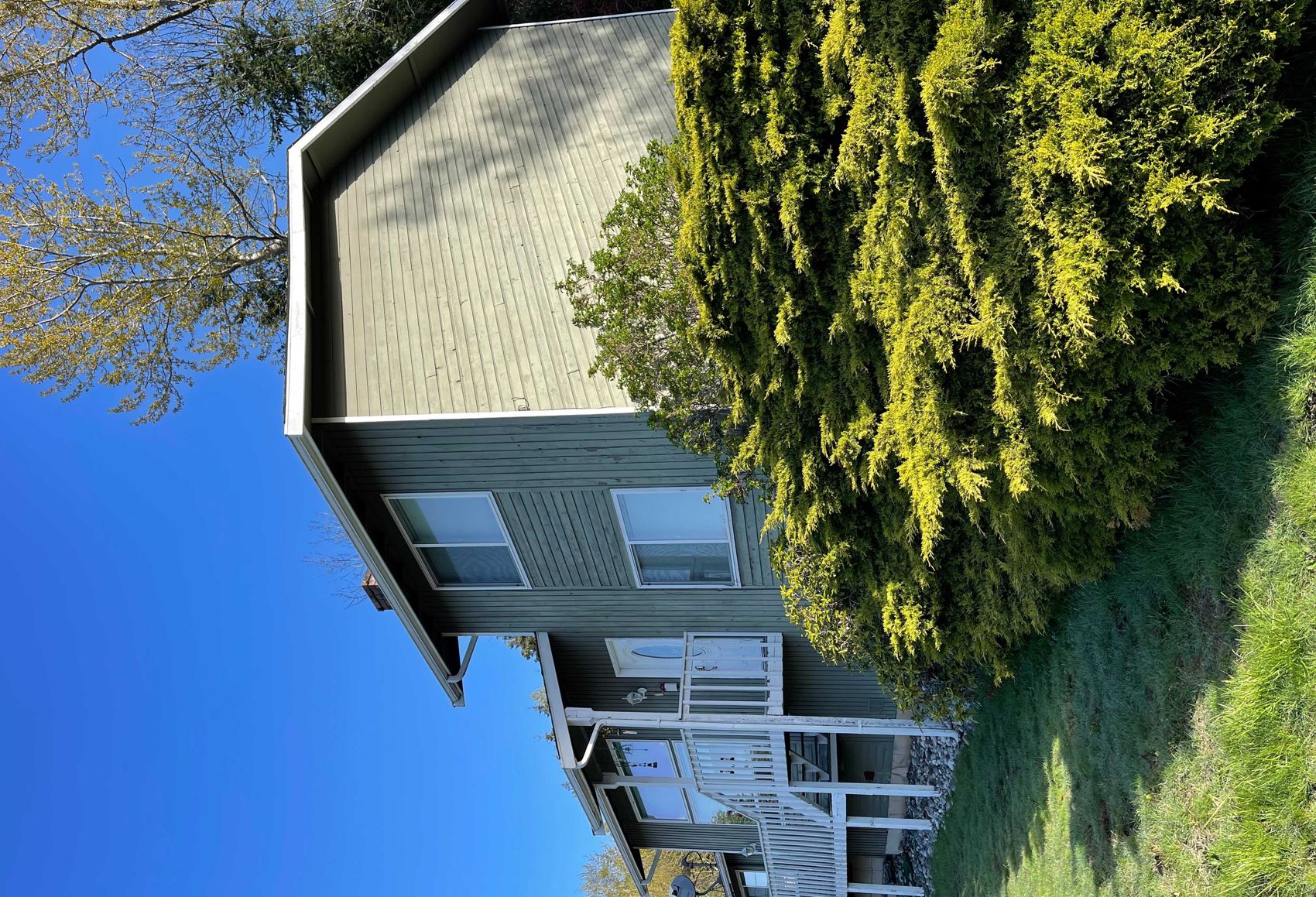
In San Antonio, Florida, your siding permit is issued by Pasco County's Building Construction Services division, not by a San Antonio building department, because San Antonio is one of the small incorporated cities that contracts its building permitting and inspection functions out to the county rather than running its own office. The same arrangement applies to Dade City. If you live in unincorporated Pasco County — which covers most of the land between San Antonio and the Gulf, including Wesley Chapel, Land O’ Lakes, and the unincorporated sections around Zephyrhills — the county issues your permit directly anyway, so in practice the process looks almost identical whether your mailing address says San Antonio, Dade City, or "unincorporated Pasco County."
That single point trips up more homeowners than anything else in the process. People search for a "San Antonio building department," assume the small-town feel means a small-town office, and either can’t find one or end up calling Dade City by mistake, or worse, assume no permit is required because no local office answers the phone under the town's name. There isn’t a separate counter to find. Once a contractor or homeowner accepts that the county is the issuing authority for both the city of San Antonio and the surrounding unincorporated land, the rest of the process — application, plan review, fees, inspections — follows one consistent, countywide track rather than a patchwork of local rules.
Pasco County's Building Construction Services division reviews applications, issues permits, and schedules inspections for one- and two-family dwellings, additions, re-roofs, siding, windows, pools, and most trade work — electrical, plumbing, and mechanical — across the areas it serves. The county maintains a countywide online portal, commonly referenced by contractors and residents as PascoGateway, where permit applications, inspection scheduling, and permit-status lookups are handled from a single login. Not every jurisdiction inside Pasco County routes through that same system, and that distinction is the detail that actually matters for a San Antonio homeowner trying to figure out where their application goes.
Four incorporated cities sit inside Pasco County's boundaries: New Port Richey, Port Richey, Zephyrhills, and Dade City. Of those, New Port Richey and Zephyrhills run their own, independent building departments with their own staff, their own fee schedules, and in some cases their own inspection-scheduling tools separate from the county's system. Port Richey and Dade City, by contrast, contract with the county for building permitting services, the same arrangement San Antonio uses. So the practical map looks like this: if your project sits inside New Port Richey or Zephyrhills city limits, you deal with that city's own department directly. If it sits inside San Antonio, Dade City, Port Richey, or anywhere unincorporated, Pasco County's Building Construction Services division is your point of contact, whether you apply in person, by mail, or through the online portal.
For siding specifically, the trigger for needing a permit under the Florida Building Code comes down to scope, not brand or material. A true re-side — removing the existing siding down to the sheathing or house wrap, replacing any damaged sheathing, and installing a new siding system — is treated as an alteration to the building's exterior envelope and requires a permit, inspection, and Florida Product Approval documentation for the new siding assembly. Smaller cosmetic work, such as replacing a handful of storm-damaged vinyl panels that match the existing installed product without disturbing the water-resistive barrier or fastening pattern underneath, is more often handled as a minor repair that may fall under a lower threshold. The dividing line between those two categories isn't always obvious from a homeowner's side of the wall, which is exactly why having a licensed contractor pull the permit — rather than skipping that step to save time — is the safer route. Alpine Exteriors pulls its own permits on full re-side jobs across this territory rather than leaving that paperwork for the homeowner to sort out after the fact, or worse, after an inspector has already flagged unpermitted work.
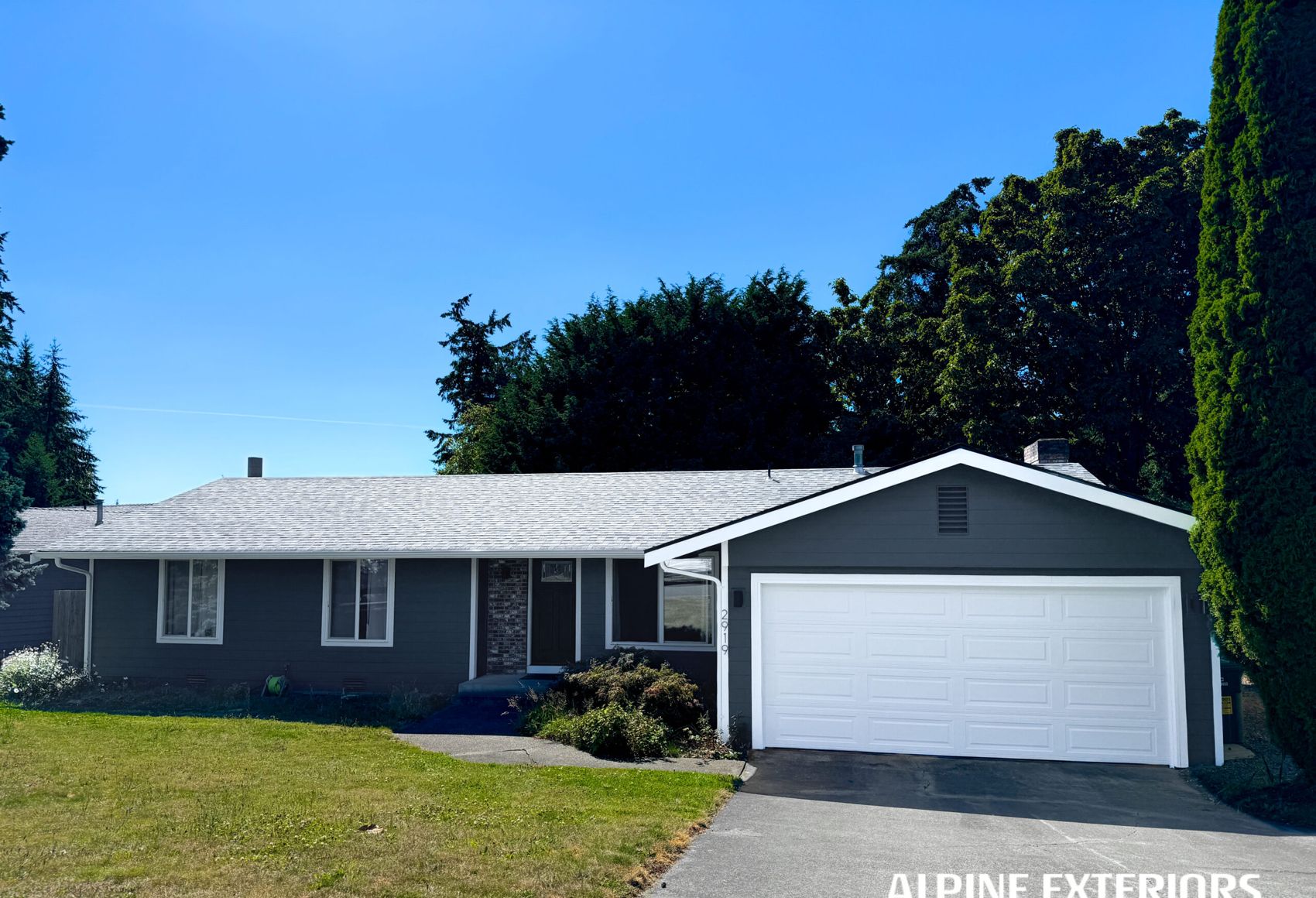
Pasco County sits outside Florida's High-Velocity Hurricane Zone — that designation is specific to Miami-Dade and Broward Counties — but the Florida Building Code still requires exterior wall coverings here to meet a specific design wind speed tied to Pasco's location, along with wind-driven rain resistance at the water-resistive barrier and flashing details around every penetration. That means the siding product itself needs a current Florida Product Approval number showing it was tested and rated for the wind pressures assigned to this part of the state, and the installation has to follow the manufacturer's approved fastening schedule for that rating, not the generic instructions printed for milder climates further north. Inspectors in Pasco County check for exactly this during a re-side: correct fastener spacing and type, proper lap and starter-strip installation, and house wrap or building paper installed and taped in a way that sheds wind-driven rain rather than trapping it against the sheathing.
Humidity is the second factor that shapes how siding jobs get built and inspected here. Florida's year-round moisture load means any gap in the water-resistive barrier, any missed flashing at a window or door head, or any siding panel installed too tight against the sheathing — leaving the assembly no room to dry out after a rain event — becomes a mold and rot risk faster than the same mistake would cause in a drier climate. Inspectors tend to look closely at flashing details around penetrations for exactly this reason, and it's worth a homeowner doing the same walk-around before signing off on a finished job, rather than assuming a clean-looking exterior means everything underneath is correct.
Intense UV exposure is more of a durability issue than a permitting one, but it's worth raising because it affects material selection, which in turn affects which product-approval documentation belongs with your permit application. Vinyl and some composite sidings can fade, chalk, or become brittle under sustained Florida sun noticeably faster than the same products would in a northern climate, so the approval and warranty paperwork attached to your permit should reflect a product actually rated for this level of exposure, not a generic listing pulled from a catalog written for a different region.
Termite pressure is a real, ongoing concern throughout inland Pasco County, including San Antonio, and while termite treatment itself isn't part of the building permit, it affects the sheathing and furring work that often gets exposed during a full re-side. If a contractor opens up the wall and finds termite damage to sheathing or framing members, that discovery legitimately changes the scope of the permitted work mid-project — it's a reason a permit gets revised, not a red flag that something went wrong with the original application.
One thing worth stating plainly rather than glossing over: San Antonio itself sits well inland, roughly a half hour's drive from the Gulf coastline, so the salt-air corrosion of fasteners, flashing, and trim hardware that's a genuine concern for homes in New Port Richey or closer to the coast isn't a significant factor for most San Antonio and Dade City siding jobs. It's a fair example of a condition that matters elsewhere across Alpine Exteriors' Tampa Bay service area but doesn't need to drive material or fastener decisions in this particular inland part of Pasco County — and a contractor who tells you otherwise to upsell a coastal-grade fastener package for an inland home isn't being straight with you.
Not every project that touches a home's exterior falls into the same permit category, and knowing which bucket a siding job lands in helps set realistic expectations for fees, review time, and inspection count. The table below compares how residential permit types line up against commercial ones for exterior work handled by Pasco County's jurisdiction, meaning unincorporated Pasco County, San Antonio, Dade City, and Port Richey.
| Permit Type | Typical Trigger | Who Reviews It | Inspections Usually Required |
|---|---|---|---|
| Residential siding (full re-side) | Removing existing siding, replacing sheathing or house wrap, installing a new siding system | Pasco County Building Construction Services | In-progress (sheathing/wrap) and final |
| Residential siding (repair/patch) | Replacing a limited number of damaged panels only, no change to sheathing or the water-resistive barrier | Often exempt or on a minor-permit track; confirm the current threshold with the county before starting | Final only, if a permit is pulled at all |
| Residential re-roof | Tear-off and replacement of the roof covering | Pasco County Building Construction Services | Dry-in and final |
| Window/door replacement | Any change in rough opening size, or a full-frame replacement | Pasco County Building Construction Services | Final, sometimes a rough-in inspection |
| Electrical/plumbing tied to exterior work | Relocating an outlet, spigot, or fixture disturbed during siding removal | Pasco County Building Construction Services, as a separate sub-permit | Rough-in and final |
| Pool/spa enclosure or screen work | New pool cage, screen enclosure, or spa installation | Pasco County Building Construction Services | Footer, framing, and final |
| Commercial exterior recladding | Any exterior wall covering change on a commercial structure | Pasco County Building Construction Services, commercial plan review track | Multiple, per the approved plan set |
The takeaway from that table for a siding project specifically: a full re-side almost always needs a permit and at least two inspections, while a small patch repair may not need one at all — but the county, not the contractor and not a homeowner's own read of the code, makes that final call, and thresholds and fee schedules do get revised from time to time, so it's worth a quick confirm-current-requirements call before assuming last year's rule of thumb still applies to this year's project.
Pasco County, like most Florida building departments, calculates permit fees using a formula tied to the value or scope of the work rather than a flat rate, so an exact dollar figure isn't something a general guide can responsibly quote — it depends on square footage, material, and the county's current fee schedule, and it should come from the county or from your contractor's permit application, not from an estimate on a webpage. What's fair to say in general terms: a straightforward residential re-side permit tends to move through review faster than a commercial project or a job that also involves structural changes, because the plan review is narrower in scope. Even so, review times shift with how busy the department is at any given point in the year, and Florida's hurricane season brings a predictable seasonal bottleneck, since storm-damage repair permits and re-side jobs from wind and hail events often surge through the same office at the same time. A homeowner planning a re-side ahead of hurricane season, rather than reacting to storm damage during it, generally sees a smoother path through permitting simply because they're not competing with a backlog of storm-repair applications.
If you're not sure whether your project needs a permit, the fastest path is a short call to Pasco County Building Construction Services describing the actual scope of work — full tear-off versus a patch repair, approximate square footage, and whether sheathing will be exposed. That one call resolves the ambiguity far faster than trying to interpret a general Florida Building Code summary yourself, because the county applies its own working interpretation of where the repair-versus-alteration line sits, and that interpretation is the one that governs your project, not a generic online explanation.
It's worth knowing the full jurisdictional map if your project, or a neighbor's, sits near a boundary line. New Port Richey and Zephyrhills issue their own building permits through their own city departments and sit outside the county's Building Construction Services jurisdiction entirely. Port Richey and Dade City, like San Antonio, contract permitting services to the county. Everywhere else — unincorporated Pasco County, which includes Wesley Chapel, Land O' Lakes, Trinity, Holiday, and the unincorporated pockets surrounding all four incorporated cities — falls under the county directly, with no separate city office in the picture at all. If a project spans a city-and-county line, or you're simply unsure which side of a boundary your address falls on, the county's online portal and a quick address lookup settle it faster than guessing based on a mailing city name, since Florida mailing addresses frequently don't line up cleanly with actual municipal boundaries. A property with a "Wesley Chapel" or "Land O' Lakes" mailing address, for instance, is almost always unincorporated Pasco County rather than an incorporated city in its own right, which is a common point of confusion for anyone new to the area.
Pasco County's Building Construction Services division issues permits for unincorporated Pasco County and for the cities of San Antonio, Dade City, and Port Richey, all of which contract their permitting functions to the county rather than operating independent building departments of their own. New Port Richey and Zephyrhills are the exceptions to that pattern — both run their own city building departments and issue permits separately from the county's system.
Some do and some don't, and the split matters for anyone planning work. New Port Richey and Zephyrhills issue permits through their own city offices, with their own staff and fee schedules. San Antonio, Dade City, and Port Richey do not run separate departments; they contract with Pasco County, so any permit for a project inside those city limits, including a siding permit in San Antonio, is processed by the county's Building Construction Services division using the same application, fee structure, and inspection process used for unincorporated areas of the county.
PascoGateway is the name generally used for Pasco County's online permitting portal, where residents and contractors can submit permit applications, pay fees, schedule inspections, and look up the status or history of a permit by property address, owner name, or permit number. For a siding project, searching by address before work begins is the quickest way to confirm whether a permit has actually been issued rather than simply applied for, and it's also the fastest way to review any inspection results already logged against a property before you buy a home or hire a contractor to continue someone else's unfinished project.
Pasco County's Building Construction Services division maintains offices serving both the west side of the county, near New Port Richey, and the central and east side, near Land O' Lakes and Dade City, reflecting the county's geographic spread from the Gulf coast inland to communities like San Antonio. Most routine residential permit applications, including siding permits, can be submitted through the county's online portal without an in-person visit, though plan review and inspection scheduling still follow the county's standard timelines regardless of how the application was filed, so it's worth confirming current office hours and any in-person requirements directly with the county rather than assuming everything can be handled remotely from start to finish.
Permit rules are a matter of public record, but figuring out exactly how they apply to your specific siding project — full re-side versus repair, which Florida Product Approval fits the material you're considering, what an inspector in Pasco County will actually check on the day of the visit — is easier with a contractor who pulls permits in San Antonio and the rest of Pasco County on a regular basis. Alpine Exteriors, Florida license RB29003900, serves San Antonio along with Wesley Chapel, Lutz, Land O' Lakes, New Port Richey, Plant City, and Zephyrhills, and can walk through whether your project needs a permit, what the scope of work will involve, and what to expect at inspection before any work starts on your home. Reach out for a straightforward assessment of your project and the permitting path it will actually follow, rather than a guess based on what worked for a different house on a different street.