
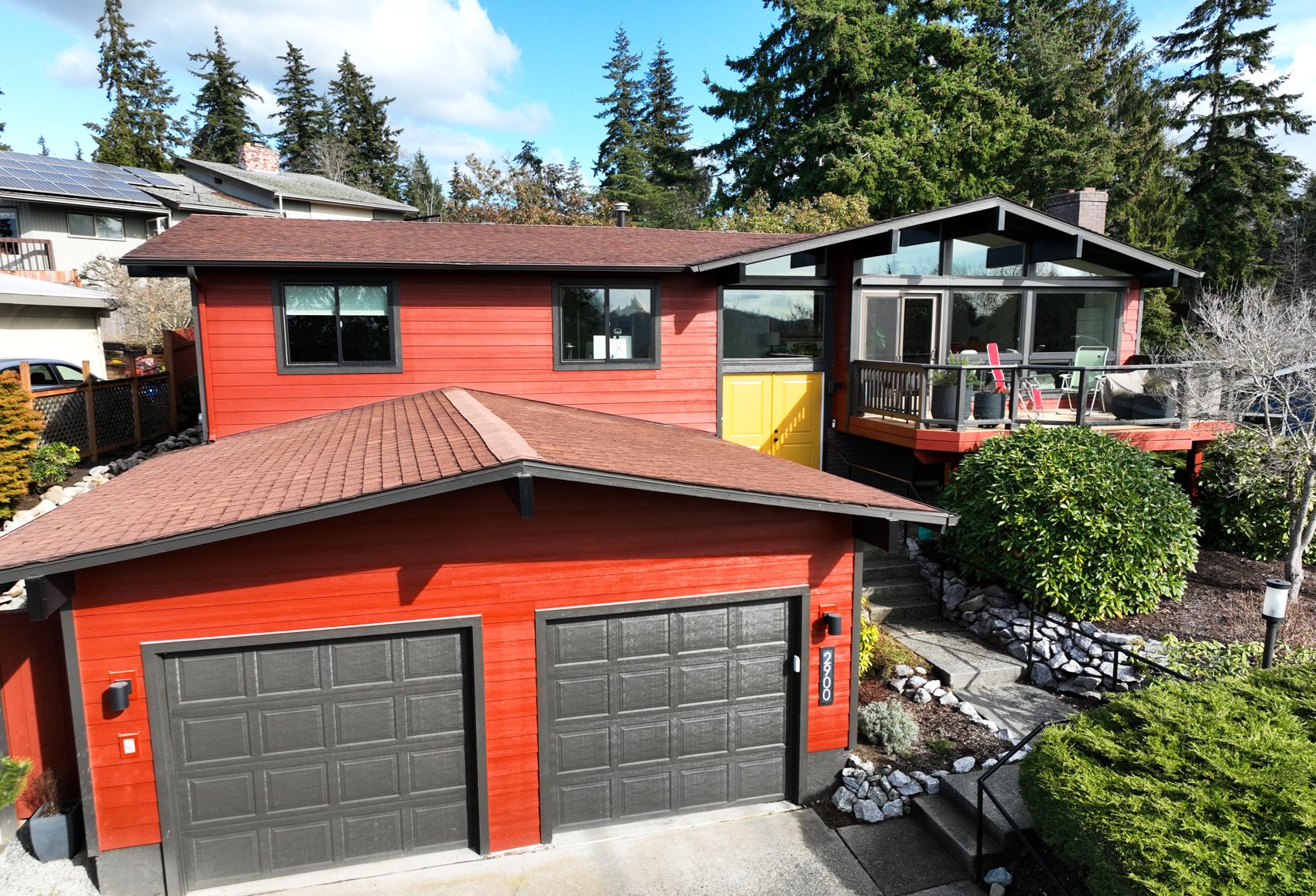
In Seffner, any siding you install or replace is governed by the Florida Building Code, and that code requires two things at once: the siding product itself must carry a valid Florida Product Approval for wind resistance, and the contractor must fasten it according to a schedule that matches the wind loads mapped for your part of Hillsborough County. In practice, that means the style and color you choose matter far less to code compliance than whether the product's tested wind rating and the installer's nailing or screw pattern actually line up with what your house's exposure requires.
Most homeowners never think about this until a permit inspector flags it, an insurance adjuster asks for documentation, or a storm peels a section of siding off a wall where the fasteners were too far apart. Understanding the basics before you sign a contract saves rework and keeps your homeowner's insurance conversation simple later.
The current Florida Building Code sets design wind speeds county by county using wind speed maps derived from ASCE 7. Hillsborough County, including Seffner, falls into a wind zone where design wind speeds run in the neighborhood of 150 mph under the code's ultimate design wind speed category, depending on the specific site's exposure classification (open terrain versus suburban or wooded, referred to as Exposure B or C). That number isn't a suggestion — it's the baseline every siding product and every fastening schedule on your home has to be engineered against.
Every siding product legally installed in Florida needs a Florida Product Approval, issued through the state's product approval system and tied to a specific FL number. That approval covers the exact profile, panel or plank dimensions, and the manufacturer's installation instructions the product was tested with. It is not enough for a contractor to use "hurricane-rated siding" in general terms — the installation has to follow the manufacturer's approved instructions for fastener type, size, spacing, and penetration depth, because that's what the wind rating was actually tested against. Swap the specified nail for a shorter one, space fasteners further apart to save time, or skip a corner detail, and the wind rating the product was approved for no longer applies to what's on the wall.
Corrosion-resistant fasteners are also specified for a reason beyond wind: Florida's humidity attacks ordinary fasteners over time, and a fastener that rusts and loses grip strength is a fastener that no longer holds to its rated pull-out value in the next storm. Code-compliant installations call for hot-dip galvanized or stainless steel fasteners rather than standard steel, especially at the field of the wall where thousands of individual fasteners are doing the structural work of keeping siding attached during high wind events.
Seffner sits inland from Tampa Bay's immediate waterfront, which actually changes the picture somewhat compared to homes in South Tampa or along the Gulf beaches. Direct salt-air corrosion — the kind that eats through unprotected metal fast in true coastal exposure — is a smaller factor here than it is closer to the water. That's a genuine, useful distinction: a Seffner homeowner doesn't need to over-spec for salt exposure the way a St. Pete Beach homeowner might.
What Seffner does share fully with the rest of the Tampa Bay region is hurricane wind load exposure, wind-driven rain, intense UV, high ambient humidity, and heavy termite pressure. Wind-driven rain is a particular concern with siding because it doesn't just test the surface material — it tests everything behind it. A properly detailed wall assembly uses a water-resistive barrier, correctly lapped and taped, with flashing at every window, door, and penetration, so that wind-driven rain during a tropical system gets shed rather than pushed behind the siding into the wall cavity. Skip that detail and you get hidden moisture intrusion long before you get a visible siding failure.
Humidity year-round, not just during storms, is what drives mold and rot risk behind siding in this climate. A wall assembly that traps moisture rather than letting it dry — inward or outward — will eventually grow mold in the sheathing even if the siding itself looks fine from the curb. That's why drainage gaps, vapor-permeable house wrap, and back-ventilated siding details matter more here than they would in a dry climate.
Termites are the other regional factor that's easy to overlook when the conversation is all about wind. Hillsborough County sits within an area of significant subterranean and Formosan termite pressure, and while modern fiber cement and vinyl siding aren't a food source, the wood trim, fascia, and fascia boards that often frame those materials are. Termite-resistant or properly treated trim, and keeping wood-to-soil contact away from the foundation, matters just as much as wind rating when you're planning a full siding project.
Start by confirming that whatever contractor you hire pulls a building permit for the siding work. In Hillsborough County, siding replacement is a permitted activity precisely because of the wind and water performance requirements above — a contractor who offers to skip the permit to save time or money is also skipping the inspection that verifies the fastening and flashing were actually done to code.
None of this requires you to become a code expert. It just requires asking the right questions before work starts, rather than after an inspector fails the job or a storm exposes a shortcut.
In nearly all cases, yes — full siding replacement and most significant siding repairs on a home in unincorporated Hillsborough County or within Seffner require a building permit, and the work is subject to inspection before it's considered complete. Very minor repairs, like replacing a small damaged section with matching material, may fall under different thresholds, but it's worth confirming with your contractor rather than assuming a project is exempt.
A Florida Product Approval is a state-level certification that a specific building product, tested in a specific configuration, meets the wind and water performance standards required by the Florida Building Code. For siding, the approval is tied to the exact profile and the manufacturer's installation instructions, which is why an inspector checking your job will want to see documentation matching what's actually on the wall, not just a general claim that the siding is "hurricane rated."
No. The High-Velocity Hurricane Zone is a stricter set of code requirements that applies specifically to Miami-Dade and Broward Counties, so products approved only through a Miami-Dade Notice of Acceptance are not required for a Seffner project. Homes here still fall under the statewide Florida Building Code's wind provisions, which set real requirements for product approval and fastening but through the standard state process rather than the HVHZ process.
A well-installed siding system generally doesn't need routine fastener checks, but it's worth a visual walk-around after any major storm to look for lifted panels, exposed fastener heads, or gaps at trim and flashing lines. Beyond storm checks, a broader visual inspection every few years — looking for caulking that's failed, corner trim that's pulled away, or staining that suggests water is getting behind the siding — catches problems while they're still a repair rather than a full replacement.
If you're planning a siding project in Seffner, Wesley Chapel, or anywhere else in Hillsborough County, it's worth having someone walk your home's exposure, wall assembly, and existing siding condition before you commit to a product or a price. Alpine Exteriors (FL license RB29003900) works throughout the Tampa Bay area and can go through the product approval, fastening, and inspection requirements specific to your address, so you know exactly what you're paying for and why it's built to hold up here.