
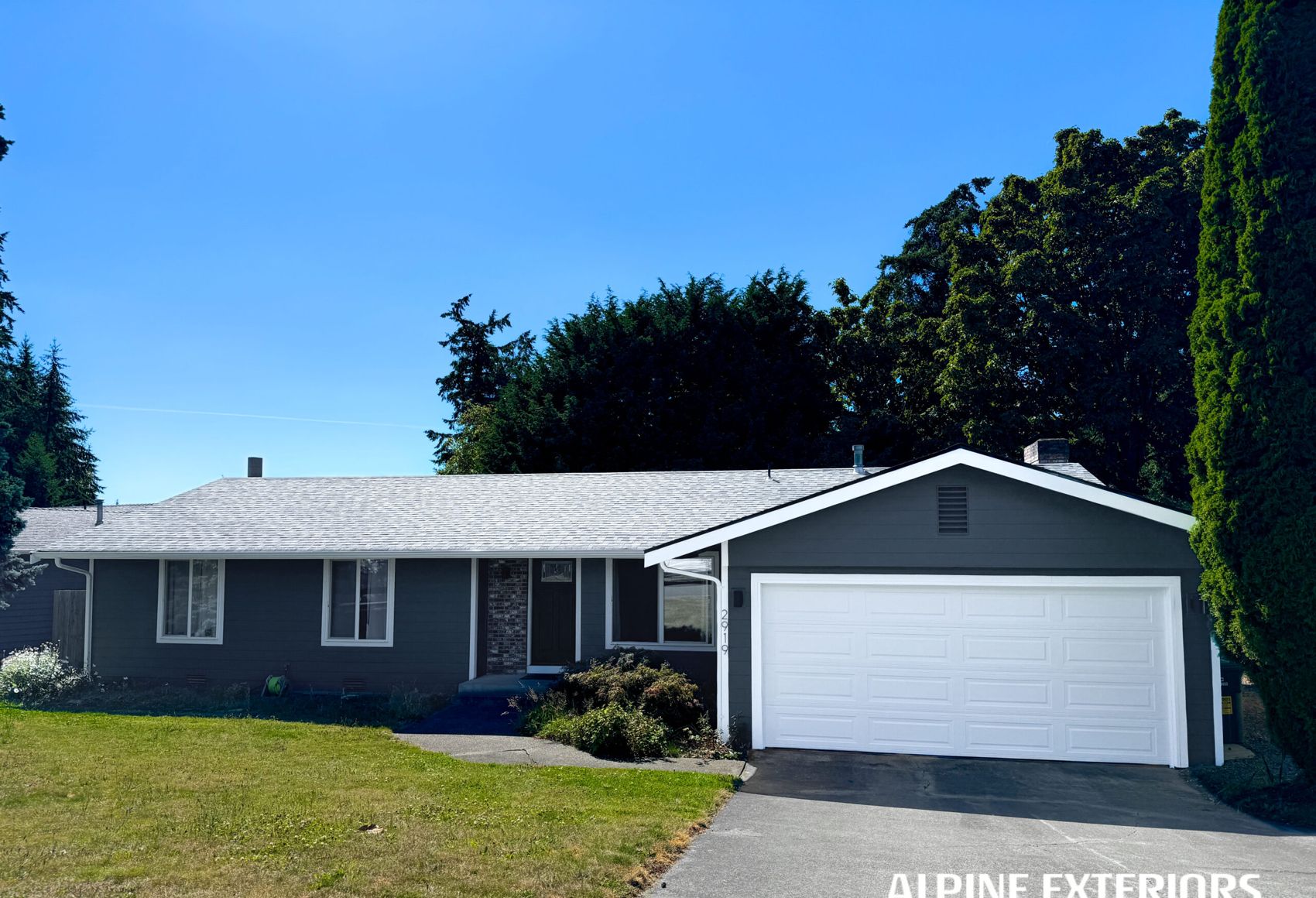
If you own a home in Elfers, off US-19 or tucked into one of the older neighborhoods near the Pithlachascotee River, you already know what Pasco County weather does to exterior surfaces. Long, humid summers, sudden downpours that come in sideways during a squall, and the occasional direct hit from a tropical system all add up over the years. Siding that's cupping, cracking, or holding moisture behind it isn't just a cosmetic problem here — it's a path for water intrusion that this climate will exploit quickly. A full siding replacement resets that clock and, done correctly, brings the exterior up to current Florida Building Code wind and water-resistance standards.
For a typical single-family home in Elfers — say 1,800 to 2,800 square feet — the on-site installation work usually runs somewhere between four and ten working days once materials are on site and crews start. That's a wide range on purpose: a simple lap-siding re-side over sound sheathing moves faster than a job that also involves replacing rotted wood, re-flashing windows, or working around a steep roofline and multiple gables. What most homeowners underestimate isn't the install time, it's everything before the crew shows up. Between permitting, product-approval paperwork, and material lead times, the gap between signing a contract and the first day of demolition is commonly four to ten weeks. Rushing that front end is how corners get cut, so a contractor who gives you a longer but honest pre-construction timeline is doing you a favor, not stalling.
Pasco County requires a building permit for siding replacement in unincorporated areas, including Elfers, because the work touches the building envelope and, in most cases, the underlying weather-resistant barrier. The permit review confirms that the proposed siding assembly carries valid Florida Product Approval or Miami-Dade NOA for the wind pressures this part of Pasco County sees, and that the installation method matches the manufacturer's tested assembly. Skipping this step to save time is a real risk: unpermitted exterior work can complicate a home sale, and it can also affect how an insurer treats a wind-mitigation claim down the road, since the OIR-B1-1802 wind mitigation inspection form documents things like opening protection and roof-to-wall connections that a proper permit trail supports.
If your property in Elfers falls under a homeowners' association or a deed-restricted community, check the covenants before ordering material. Some associations regulate siding color, profile, or even manufacturer, and approval can take a few weeks on its own. It's worth submitting the HOA request the same week you sign your contract rather than waiting for the permit to clear first — running the two in parallel is the single biggest schedule-saver in this whole process.
Material lead time is the other variable outside anyone's direct control. Fiber cement siding, vinyl in less common colors or profiles, and any custom trim or fascia typically ship from regional distribution centers and can take two to six weeks depending on the manufacturer's current backlog. Standard vinyl colors tend to be the fastest to source; textured fiber cement in a specialty finish tends to be the slowest. Alpine Exteriors orders material as soon as the contract and color selections are final, specifically so the permit review and the manufacturing lead time overlap instead of stacking end to end.
Once the permit is issued and material has arrived, the physical work generally follows this sequence:
A little preparation on your end keeps the crew efficient and protects your property. Move vehicles out of the driveway and garage access area for the duration of the job, since siding delivery and debris removal both need clear space. Trim back shrubs or plants growing against exterior walls — crews will protect what they can, but tight vegetation close to the siding line slows the work and increases the odds of accidental damage. If you have exterior-mounted items like address numbers, light fixtures, hose bibs, or a security camera, let the crew know in advance so they can be removed and reinstalled rather than worked around.
Inside the house, expect noise and vibration, especially during removal and fastening. Take down wall-mounted picture frames or mirrors on exterior walls, since impact vibration can occasionally shake them loose. If you have pets, plan for them to be indoors or elsewhere during work hours, since gates and yard access will be open more than usual. Finally, expect some dust and debris in the yard even with tarping in place; a magnetic nail sweep of the work perimeter is standard practice at the end of each phase, but a final pass after landscaping goes back to normal is a reasonable thing to ask for.
Pasco County requires inspections at defined points in the process — typically a check of the weather-resistant barrier and flashing before siding goes on, and a final inspection once the job is complete. These aren't formalities to rush through; the mid-point inspection is the last chance to catch a flashing detail before it's covered by siding, and it's much cheaper to fix at that stage than after the fact. A contractor should schedule these inspections proactively rather than waiting for you to ask.
Cleanup happens daily during the job, not just at the end. Old siding and packaging waste should be hauled off or contained each day, since a half-finished exterior sitting open overnight is more of a concern here than in drier climates, both for sudden rain and for pests finding their way into exposed sheathing. The final walkthrough is where you and the crew lead go around the entire exterior together, checking sightlines, trim alignment, caulk lines, and paint or color-match consistency. This is the time to flag anything that doesn't look right — not weeks later after everyone's moved on to another job.
New siding in this climate still needs occasional attention. Rinse it down a couple of times a year with a garden hose to clear pollen, salt residue if you're within a few miles of the Gulf, and the general grime that humid air and intense UV exposure leave behind. Avoid pressure washing directly at seams and edges, since high-pressure water can force its way behind panels even when the installation is sound. Walk the exterior after any significant storm and look for loose panels, damaged trim, or gaps in caulking, particularly around windows and corners, since these are the spots wind-driven rain finds first.
Warranty coverage on a siding job is really two separate things: the manufacturer's product warranty, which covers material defects and is typically prorated over a long term, and the contractor's workmanship warranty, which covers installation quality for a shorter, defined period. Ask for both in writing before work starts, not after. Alpine Exteriors provides documentation on both at project closeout, along with copies of the Florida Product Approval numbers for the materials installed, which you'll want on file if you ever complete an OIR-B1-1802 wind mitigation inspection for insurance purposes.
Some exposure is unavoidable, but a competent crew limits it by working in sections rather than stripping the entire house at once, and by keeping an eye on the forecast so a section isn't opened up right before rain is expected. Even so, Florida's afternoon storms can build quickly in summer, so it's reasonable to ask your contractor how they handle an unexpected downpour mid-project.
You don't need to be present for the entire job, but it helps to be available, or reachable by phone, on the day sheathing is inspected in case wood replacement is needed, and for the final walkthrough. Being home for the first day is also useful so the crew lead can confirm access points, staging areas, and anything fragile nearby.
This is common enough in older Elfers homes that most contracts include an allowance or a clear per-square-foot rate for it rather than treating it as a surprise. The area is documented with photos, priced before the repair is made, and reviewed with you — reputable contractors won't just proceed and add it to the final bill without your sign-off.
Material lead times can stretch during peak hurricane season as regional demand rises, and an active storm forecast may pause outdoor work for safety even if your house isn't in the storm's direct path. Scheduling a siding replacement in the spring or early summer, ahead of the busiest part of the season, generally means shorter waits and fewer weather-related pauses.
Every Elfers home is a little different once you get past the front elevation — roofline, existing sheathing condition, and HOA requirements all shape the real timeline more than any general estimate can. Alpine Exteriors, Florida contractor license RB29003900, walks Tampa Bay homeowners through permitting, material selection, and a realistic schedule before any tarps go down. If you're weighing a siding replacement in Elfers or elsewhere in Pasco County, reach out for an on-site evaluation and a written scope that spells out each stage in plain terms.