
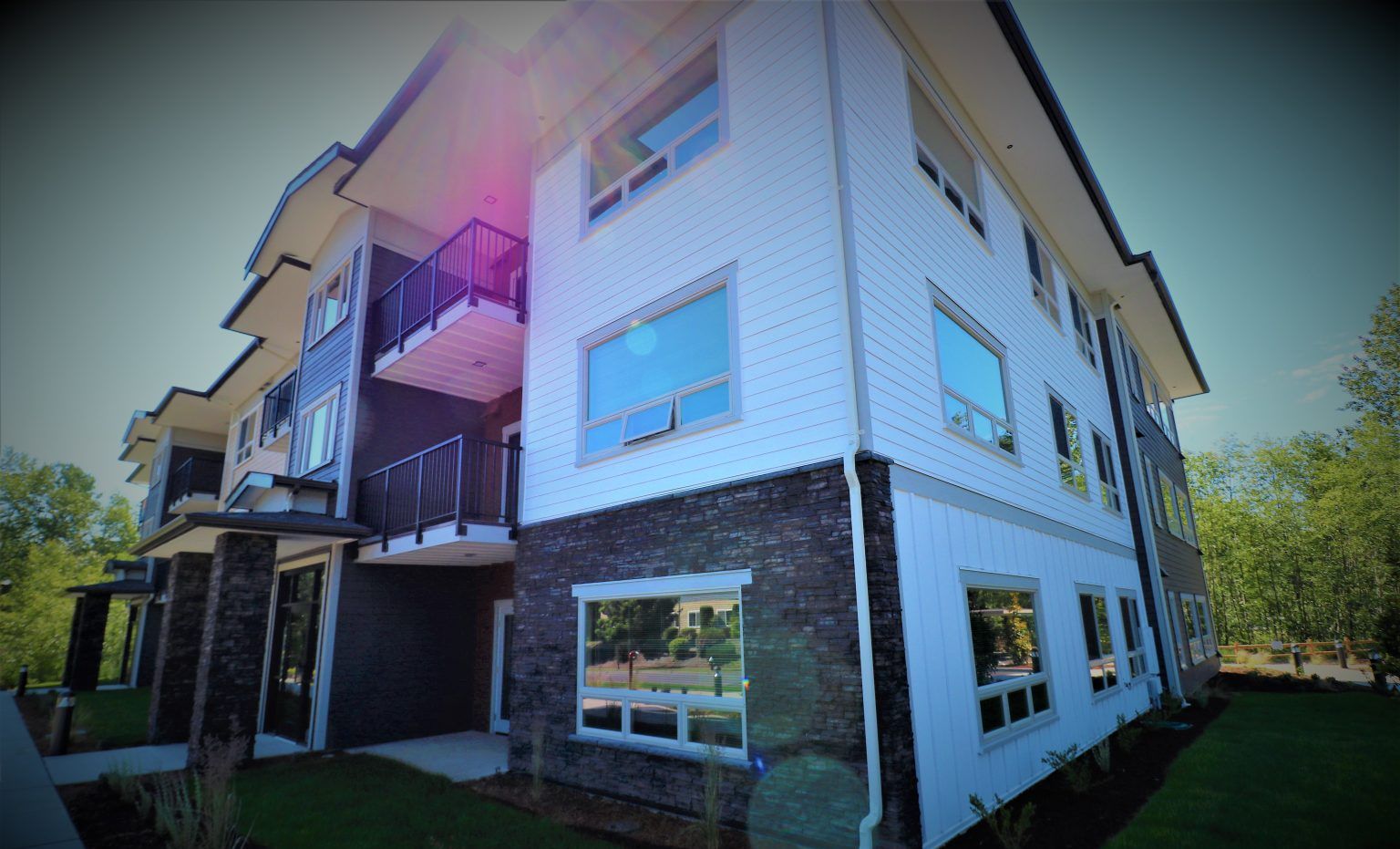
Both smooth and woodgrain HardiePlank are fiber cement lap siding from the same James Hardie product line, engineered and rated to the same standards for Florida's heat, humidity, and wind. The texture choice comes down to architecture and personal taste far more than durability, because the two finishes perform almost identically against everything Tampa Bay's climate throws at a house. As a starting point: lean smooth if your home is a modern, transitional, or coastal-style build with clean trim lines you want to show off, and you'd rather have a slightly easier surface to keep clean between washes. Lean woodgrain if your home has a craftsman, farmhouse, or traditional profile and you want the shadow-line depth of cut cedar without the rot and upkeep that comes with real wood siding in a humid climate.
Smooth lap has a flat, uniform face and reads as clean and contemporary at a distance, which is why it shows up so often on newer builds around Wesley Chapel and Land O' Lakes, on coastal-influenced designs, and on ranch homes that want a tidier, less busy elevation. Because there's no embossed grain to create shadow variation, the factory-applied ColorPlus finish tends to look more consistent in bright, direct Florida sun, with color reading true rather than shifting slightly with the angle of light the way a textured surface can. Smooth siding also has no grooves to trap pollen, grit, or the black-streak mildew that's a fact of life in a humid subtropical climate, so it often rinses cleaner with a simple garden-hose wash during the routine soft-washing most Tampa Bay homes need once or twice a year. The tradeoff is that a flat surface is less forgiving: any waviness in the wall sheathing, an uneven nailing pattern, or a sloppy caulk line at a butt joint is more visible on smooth board than it would be on a textured one, so installation quality matters more to the finished look.
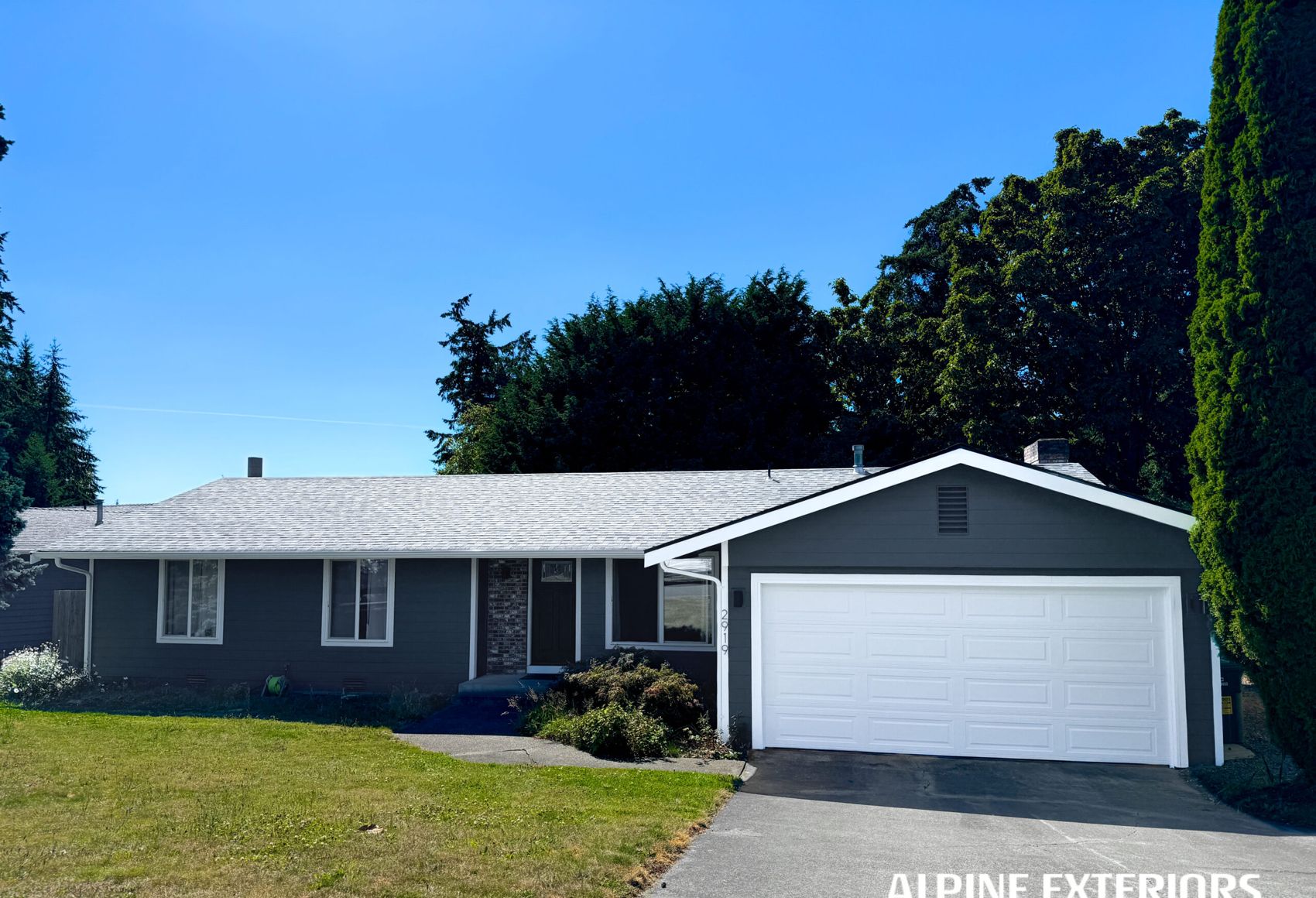
Woodgrain, sometimes called cedarmill, is embossed to mimic the look of sawn cedar lap siding, the traditional look found on a lot of established homes in Plant City, Zephyrhills, and the older neighborhoods around Lutz. That texture does useful work: it hides minor surface imperfections, small dings from wind-blown yard debris after a summer storm, and slight panel waviness far better than a flat face does. The tradeoff runs the other direction from smooth: those grooves can hold a bit more of the pollen, dust, and humidity-driven mildew film that builds up in shaded, damp corners of a lot, so woodgrain sometimes needs a scrub-brush pass rather than just a hose rinse to look fresh. It's also worth setting expectations: embossed woodgrain is a good approximation of cut cedar, not a perfect match, and some homeowners notice up close that the repeating pattern reads a little more uniform than real wood grain would.
Texture itself changes very little about how the siding performs or what it costs to own. The table below lays out where the two options actually differ and where they're effectively a tie.
| Factor | Smooth HardiePlank | Woodgrain HardiePlank |
|---|---|---|
| Cost | Installed cost in the Tampa Bay market typically runs $9 to $14 per square foot depending on plank width, trim detail, and prep work, since texture alone doesn't move the price. | Same installed range as smooth; any price difference on a given job usually comes from siding profile such as lap width or board-and-batten, or from substrate repair, not from texture. |
| Lifespan | Same fiber cement substrate and the same manufacturer limited warranty; expect several decades of service with normal upkeep. | Identical substrate and warranty coverage; embossing doesn't add or subtract structural life. |
| Maintenance | Generally easier to keep clean with a routine hose rinse; caulking at joints and trim still needs periodic inspection. | May need an occasional scrub in shaded or damp areas where mildew collects in the grooves; same caulk and joint inspection schedule as smooth. |
| Appearance | Crisp, uniform, modern-leaning; shows trim detail cleanly. | Adds shadow-line depth and a traditional, cedar-like look. |
Once you strip out style preference, the decision really comes down to how each option holds up against the specific stresses of a Tampa Bay exterior, and on almost every one of those, texture is beside the point. Hurricane wind load resistance comes from panel thickness, the fastening schedule, and the Florida Product Approval backing the installation, not from whether the face is flat or embossed; a smooth panel installed to code handles wind-driven rain and uplift the same as a woodgrain panel installed the same way. Alpine Exteriors installs both textures to the fastening pattern required for our wind zone under the Florida Building Code, so the texture you pick doesn't trade away any storm performance. Extreme humidity and the mold pressure that comes with it are managed the same way regardless of texture: keeping gutters clear, maintaining a gap where siding meets grade, and letting an algae-resistant paint additive do its job. Intense UV is handled by the factory ColorPlus finish on either option, which resists the fading that eventually chalks out field-applied paint. Termite pressure, which is real in this part of Florida, is a non-issue for fiber cement either way, since termites don't feed on it the way they would on wood or wood-composite siding. Salt air is the one condition where location matters more than texture: homes closer to the Gulf side around New Port Richey or right on a Tampa Bay waterfront should plan on rinsing either texture a bit more often to clear salt film, and using corrosion-resistant fasteners and trim hardware. One more regional wrinkle worth checking before you decide: many newer master-planned communities in Wesley Chapel and Land O' Lakes have HOA architectural guidelines that specify or restrict certain siding profiles and colors, so it's worth pulling your community's design standards before ordering samples, since some HOAs are specific about lap reveal or texture while others only regulate color palette. Put plainly: choose the look you'll be happiest walking up to every day, because Alpine Exteriors can make either texture perform to the same standard on the storm, humidity, and sun side of the equation.
No. Wind performance comes from the panel's thickness, the fastening pattern used during installation, and the Florida Product Approval rating behind that installation, not from whether the face is smooth or embossed. Alpine Exteriors installs both textures to the same code-required fastening schedule for our local wind zone.
Smooth panels are usually a bit easier to keep looking clean because there's no grain to trap grit or the mildew film that forms in shaded, damp spots. Woodgrain's grooves can hold slightly more of both and may need an occasional scrub-brush pass rather than just a hose rinse.
Yes, and it's a common design choice: for example, woodgrain lap across the main field with smooth trim boards and fascia, or smooth panels on a modern addition next to an original structure clad in woodgrain. The two profiles are dimensionally compatible and can be mixed on one elevation or between sections of a home.
No. Wind mitigation credits and the inspection captured on the OIR-B1-1802 form evaluate things like roof shape, opening protection, and roof-to-wall connections, not siding surface texture, so your premium impact should be the same regardless of which finish you pick.
Photos only tell you so much about how a texture will actually look on your roofline, in your trim color, under real Tampa Bay sunlight. Alpine Exteriors (FL license RB29003900) brings large-format smooth and woodgrain HardiePlank samples to an on-site consultation for homeowners throughout Tampa, Wesley Chapel, Lutz, Land O' Lakes, New Port Richey, Plant City, and Zephyrhills, so you can compare both against your own house before committing. Reach out to schedule a walk-through and get a straight answer on which texture and which installation details make sense for your specific home.