
Hudson sits on Pasco County's Gulf shoreline, and that location shapes almost every good decision about exterior color. Between the salt-tinged air off the water, the intense subtropical sun, and the mix of older waterfront cottages and newer HOA-governed subdivisions inland toward Beacon Woods and the Little Road corridor, a color that looks great on a paint chip in Ohio can fade, chalk, or clash within a few years here. This guide walks through the siding colors that tend to hold up and look right in Hudson specifically, why they work, and where the honest trade-offs are. Alpine Exteriors put this together from repeated conversations with Pasco County homeowners weighing the same choice, not from a manufacturer's brochure.
For most Hudson homes, the safest and best-performing choices cluster around three families: warm sandy neutrals, soft warm whites, and light gray or greige tones. All three share two traits that matter more here than almost anywhere else in the country: they reflect rather than absorb the sun's heat and UV load, and they read as "neutral enough" to clear most HOA architectural review committees without a second submission. If you want a short list to start from:
None of these are exciting choices in isolation. That's somewhat the point — in a climate this harsh on exterior finishes, boring and durable usually beats bold and short-lived.
Every recommendation below was weighed against the specific stresses Hudson and the surrounding Pasco County towns put on exterior siding:
Tans that echo beach sand and dune grass are consistently among the best-performing choices in Hudson. They hide the fine dust and pollen that settles on siding between rains, they read as warm rather than sterile against the area's mostly sandy, sun-bleached soil, and they tend to sail through HOA review because they're already the dominant palette in most Pasco County subdivisions. The honest downside: because this color family is so common here, a wheat or dune-tone house can look a little anonymous next to three identical neighbors on the same street. It's also worth knowing that lighter tans can show green algae streaking under roof valleys and gutters faster than a mid-gray would, simply because the contrast is more visible.
A warm off-white — sometimes labeled oyster, linen, or dover white — is close to the default "safe" choice for Hudson homes, and for good reason. It reflects heat well, it's the single easiest color to get approved in a deed-restricted community, and it pairs cleanly with the terracotta and gray roof tones common on Pasco County homes. The trade-off is maintenance visibility: any true white or near-white shows mildew spotting, tannin streaks from nearby oak or pine trees, and rust bleed from fasteners more obviously than a tan or gray would. Homeowners near mature tree canopy in the Land O' Lakes or Lutz direction should expect to wash white siding more often than they would a mid-tone color to keep it looking sharp.
Light gray and greige (a gray-beige blend) have become popular in Hudson over the last several years, and they earn it. Gray hides both dust and mildew better than white while still reflecting a meaningful amount of solar heat, and it sets off green landscaping — palms, crepe myrtles, St. Augustine lawns — more crisply than tan does. The risk with gray is picking one with too much blue undertone; in Hudson's very bright, warm light, a cool-toned gray can look flat or almost lavender at certain times of day, which is a common regret among homeowners who chose a swatch indoors or up north and only saw the true color once it was installed under Florida sun.
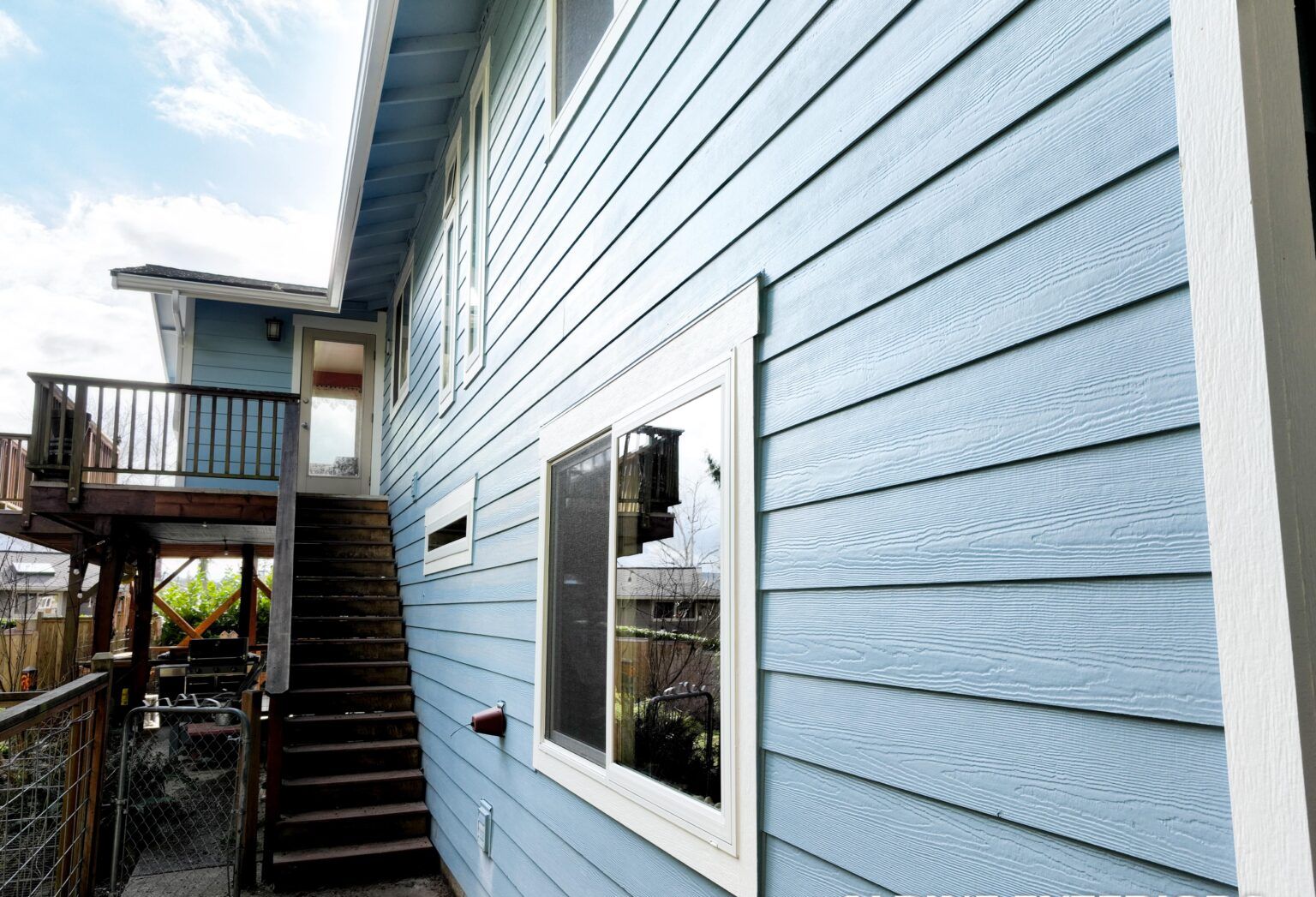
For homes closer to Hudson Beach, the canals, or anywhere the water view is part of the property's identity, a muted blue-gray can be a genuinely good fit rather than just a trend. It ties the house to its setting without going full nautical-theme bright blue. The honest caution here is fade rate: blue pigments, especially in lower-grade vinyl siding, are among the more UV-sensitive colors on the market and can shift or dull faster than neutrals under Florida's sun exposure. If you want a blue-gray, it's worth paying attention to the specific product's warranty language on color retention and, where budget allows, choosing a factory-baked finish over a cheaper extruded vinyl in this color family.
Charcoal, deep navy, or bronze-toned siding can look striking as an accent — around a garage face, a porch gable, or a single architectural feature — without being a mistake. Used across an entire elevation in Hudson's climate, though, dark colors absorb significantly more heat and show UV fade and chalking faster than any lighter option, and they're also the color family most likely to draw a second look, or an outright rejection, from an HOA architectural committee that's used to approving neutrals. If a client wants depth and contrast, we generally steer that toward trim, shutters, or a front door rather than the full field of siding.
A few color choices come up often enough in conversations with Pasco County homeowners that they're worth addressing directly, along with the reasons they tend to disappoint here specifically:
Not directly — wind and impact performance come from the siding material, its Florida Product Approval, and correct installation to the wind-load requirements in the Florida Building Code for your exposure category, not from the color itself. Where color does matter is cosmetic: after a storm, lighter and mid-tone colors tend to hide debris streaking and water staining better than very dark finishes, and any color can show fastener or panel damage more clearly once you know to look for streak lines or lifted edges.
Yes, in a meaningful way. Light and mid-tone siding reflects more solar radiation than dark siding, which reduces surface temperature and can modestly ease the load on your air conditioning system, especially on west- and south-facing walls that take the brunt of Florida's afternoon sun. It won't replace proper attic insulation or a well-sized HVAC system, but it's a real, cumulative advantage over a full hurricane season of sun exposure.
Start with your community's written architectural guidelines or covenants, which most Hudson-area HOAs maintain and update periodically, and submit a formal color request before ordering material — verbal approval from a neighbor or board member isn't the same as a documented sign-off. Alpine Exteriors can help pull sample boards and product color names that match what a given community has historically approved, which speeds up the review process considerably.
No — the wind mitigation inspection reported on the OIR-B1-1802 form evaluates things like roof-to-wall connections, roof covering, and opening protection, not siding color. Siding color is a cosmetic and durability decision that sits alongside, not inside, the factors insurers use to calculate wind mitigation credits.
Choosing a siding color in Hudson means balancing how it looks against your landscaping and roofline, how it will hold up to Gulf Coast sun and salt air over a decade or more, and whether it will sail through your HOA's review the first time. Alpine Exteriors, Florida contractor license RB29003900, works with homeowners throughout Hudson and the rest of Pasco County — including Wesley Chapel, Lutz, Land O' Lakes, New Port Richey, Plant City, and Zephyrhills — to match real, in-stock siding colors and product lines to what actually performs well on the ground here. If you're weighing a color decision and want honest input before you commit to an order, reach out to Alpine Exteriors for a consultation and a look at physical color samples in Hudson's own daylight, not just a swatch under indoor lighting.