

For most homes in Thonotosassa, the two siding types worth serious consideration are fiber cement and impact-rated vinyl. Fiber cement wins on durability, fire resistance, and long-term resale value; impact-rated vinyl wins on upfront cost and maintenance simplicity. Which one is "best" depends less on the product and more on your budget, your home's age and structure, and how long you plan to own it. There isn't a single right answer for every house on Fowler Avenue, along Lake Thonotosassa, or out toward Trapnell Road — a 1970s ranch on a slab, a newer stucco-and-frame build, and a manufactured home each have different starting points.
Thonotosassa sits inland in Hillsborough County, which matters: this is not a barrier-island or bayfront job. Salt spray, which drives corrosion concerns closer to the Gulf beaches and Tampa Bay shoreline communities, is a minor factor here compared to what a house in South Tampa or on Davis Islands deals with. What does matter locally is wind load under the Florida Building Code, wind-driven rain during tropical systems, near-constant humidity that pressures paint and substrates, intense UV that fades and chalks lesser products, and subterranean termite activity that's common throughout this part of the county. Alpine Exteriors sizes siding recommendations around those actual conditions rather than a generic list.
| Siding type | Wind/storm performance | Humidity & mold resistance | Upfront cost |
|---|---|---|---|
| Fiber cement | Excellent when installed to product approval | Excellent (won't rot, resists mold growth on the surface) | Higher |
| Impact-rated vinyl | Good to very good, product-dependent | Very good (won't rot; can trap moisture behind it if installed poorly) | Lower to moderate |
| Engineered wood | Good if properly flashed | Fair — needs vigilant sealing and maintenance | Moderate |
| Aluminum/steel | Very good | Excellent | Moderate to higher |
We're not ranking siding on looks alone. For a Thonotosassa house, these are the criteria that actually change the outcome:
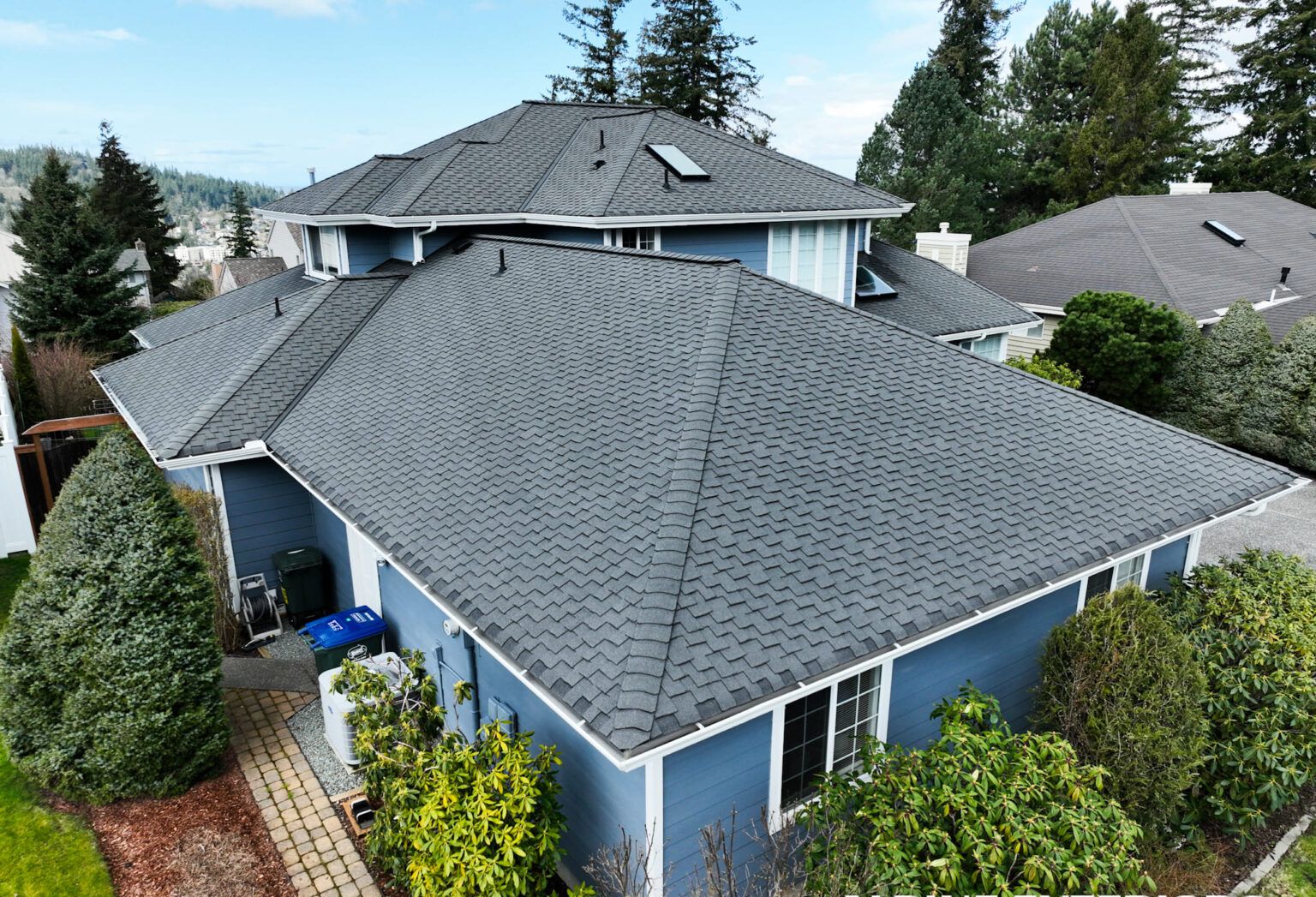
Fiber cement (cement, sand, and cellulose fiber pressed into planks or panels) is the option we recommend most often for full re-sides in this area, and it's a large share of what Alpine Exteriors installs on Hillsborough County homes.
Pros: It doesn't rot, doesn't feed termites, and holds paint far longer than wood because it's dimensionally stable through humidity swings. It's non-combustible, which some insurers factor into premiums. Factory-applied finishes hold color well against Florida UV, better than most vinyl over a long time horizon. When installed with the correct product-approved fastening pattern, it performs well in high-wind testing.
Cons: It's heavier and more labor-intensive to install than vinyl, which shows up in the total price. It's not a DIY material — poor cuts, wrong fastener spacing, or skipped caulking at joints will shorten its life and can void the manufacturer's warranty. It still needs repainting eventually (typically well over a decade out, but not never), and it's rigid enough that impact from debris in a storm can crack a plank, which then needs a matched replacement rather than a patch. Cost ranges vary widely by home size, trim complexity, and whether tear-off is needed, so get a walk-through quote rather than relying on a per-square-foot number online.
Standard vinyl has a place in budget-conscious projects, but for this region we steer clients toward impact-rated, thicker-gauge vinyl products carrying current Florida Product Approval for wind pressure and impact resistance.
Pros: Lower material and labor cost than fiber cement, no repainting ever required, and it won't rot or attract termites since there's no organic material for them to eat. Good impact-rated products have held up well in wind-driven rain testing when installed with the right starter strip, house wrap, and overlap details. It's a reasonable fit for rental properties or homes where budget matters more than a 30-year horizon.
Cons: Thinner, non-impact-rated vinyl is a poor match for this area — it can crack in wind-borne debris and distort in direct summer sun on west-facing walls. Even good vinyl can trap moisture behind it if the water-resistive barrier and flashing details underneath aren't done correctly, which is an installation issue more than a product one, but it's a real risk if you hire on price alone. Color is baked in, which sounds like a pro until you want to change the look later — repainting vinyl is possible but not straightforward. It also has a plainer profile than fiber cement or wood-look products, which matters to some buyers and not others.
Engineered wood (wood strand or fiber composite treated with resin and coated at the factory) gives a traditional wood look at a lower cost and weight than real wood.
Pros: Easier and faster to install than fiber cement, with a warmer appearance many homeowners prefer. Factory treatment resists termites and moisture far better than raw lumber siding, which we don't recommend in this area at all.
Cons: This is the product where installation quality matters most in Thonotosassa's climate. Every cut edge has to be sealed, every joint properly caulked, and ground clearance maintained, or moisture and termite pressure will find the weak point. It's more maintenance-dependent than fiber cement or vinyl, and if a previous owner or a corner-cutting installer skipped sealing details, problems can hide behind the siding for years before showing up as soft spots or paint failure. We use it selectively, usually where the homeowner specifically wants the wood-grain look and understands the upkeep.
Less common on new installations here, but still around on older homes and occasionally chosen for specific needs.
Pros: Non-combustible, doesn't rot, and immune to termites entirely. Steel in particular holds up well to wind and impact when properly rated.
Cons: Aluminum dents relatively easily, and dents in siding this thin don't pop back out. Both metals can show fastener corrosion over time in Florida's humidity if the wrong hardware was used, and color-matching repairs on older aluminum siding gets hard once the factory finish has faded. It's a narrower fit for this market than fiber cement or vinyl, and we usually only recommend it when a specific use case calls for it.
A few choices consistently underperform for homes in this area, and it's worth naming them directly:
One clarification worth making plainly: siding itself is not part of Florida's wind mitigation inspection (the OIR-B1-1802 form), which focuses on roof covering, roof-to-wall connections, and opening protection for insurance credits. Don't expect a siding upgrade alone to move your wind mitigation discount — its value is in protecting the structure and reducing water intrusion risk, which is worth plenty on its own.
It depends on your time horizon and the home. If you plan to own the house for a decade or more, or the property has a lot of direct west/south sun exposure and past moisture issues, fiber cement's durability and paint retention usually justify the higher install cost. If you're working with a tighter budget, selling within a few years, or the home is a rental, impact-rated vinyl is a legitimate choice that won't leave you with regrets, as long as it's installed correctly.
Yes. Being inland reduces storm surge and salt exposure risk, but it doesn't reduce wind speed much during a hurricane — wind loads under the Florida Building Code are based on your specific location and exposure category, and inland Hillsborough County still sees damaging wind events. Product-approved, correctly installed siding matters regardless of distance from the Gulf.
In drier regions, siding failure is often UV- or freeze-thaw-driven. Here, the bigger risk is sustained moisture: repeated wet-dry cycling that stresses seams and coatings, plus the mold and mildew that grow readily on surfaces that don't dry out quickly. That's why we weigh a product's moisture behavior and drainage details as heavily as its wind rating when recommending siding for this area.
No — vinyl, fiber cement, aluminum, and steel aren't food sources for termites, which is a real advantage over wood siding in a termite-pressured area like Hillsborough County. The risk with any siding type is what's underneath or around it: exposed wood trim, fascia, or framing that termites can reach if moisture and wood contact aren't managed. The siding material itself, if it's one of these four, isn't the vulnerability.
Every property along Lake Thonotosassa, Fowler Avenue, or out toward the county's rural edges has its own mix of sun exposure, tree cover, and wall assembly, and that changes which siding actually makes sense. Alpine Exteriors is a licensed Florida contractor (RB29003900) serving Thonotosassa and the greater Tampa Bay area, and we'll walk your property, look at what's actually driving wear on your current siding, and give you a straight recommendation with real cost ranges — not a generic pitch for whatever we have the most of in the warehouse. Reach out to schedule a walk-through and get a written estimate for your home.