
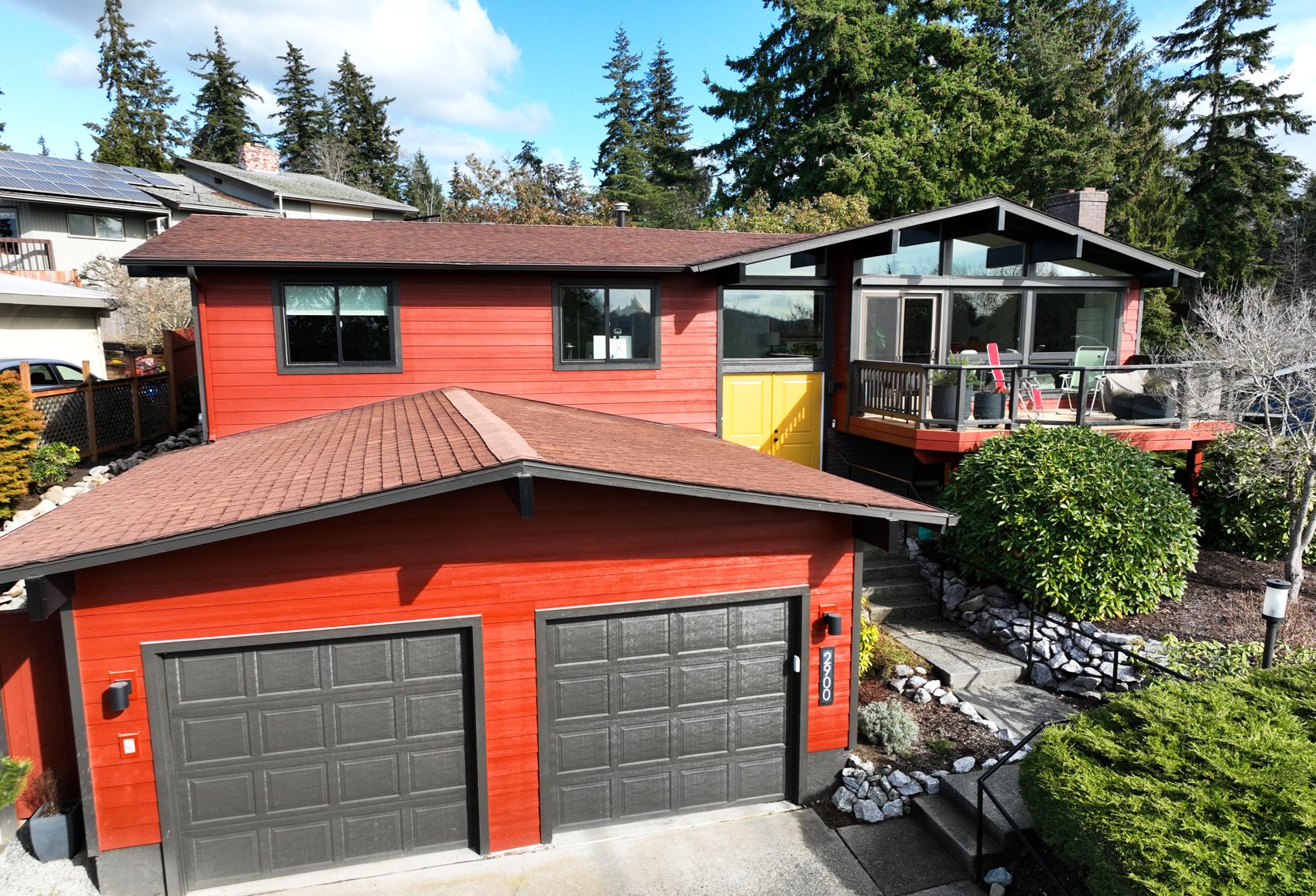
The short, honest answer: most engineered wood siding installed on a Tampa Bay home will perform well for roughly 20 to 30 years before it needs replacement or a major refinish, even though many manufacturers write warranties for 30 to 50 years. The gap between the warranty number and the real-world number comes down almost entirely to how the product is installed, how well the paint and caulking are maintained, and how much wind-driven rain and humidity the walls take on over the decades.
That is not a knock on the material. Modern engineered wood siding, sometimes called engineered wood strand siding, is built from wood strands bonded with resin under heat and pressure, then treated with a zinc borate preservative and coated with a factory primer. It is a genuinely different product from the hardboard and OSB sidings sold in the late 1980s and 1990s that developed widespread rot problems and ended up in class-action settlements. Those older products lacked the resin saturation and borate treatment that today's engineered wood relies on, and the difference in field performance has been significant. Still, improved does not mean maintenance-free, and that distinction matters more in a climate like ours than it does almost anywhere else in the country.
Four things drive how long engineered wood siding actually lasts on a given house, and none of them are the brand name on the product.
Installation quality comes first. Engineered wood siding is manufactured to shed water when it is lapped, fastened, and flashed correctly, with proper clearance above rooflines, decks, and grade, and with the factory-cut edges sealed or primed before installation rather than left raw. A crew that rushes the flashing details around windows, doors, and roof intersections, or that face-nails too tightly, creates the entry points where water gets behind the panel and stays there. On a house with careful installation, water sheds off the surface the way the product was engineered to do. On a house with sloppy installation, the siding is fighting an uphill battle from day one, and no amount of later maintenance fully makes up for it.
Coating and caulk maintenance comes second. The factory primer is not the final finish; it is a base that needs a quality topcoat, and that topcoat needs to be inspected and refreshed on a cycle, typically every five to ten years depending on sun exposure and paint quality. The seams between panels and the joints around trim, windows, and penetrations rely on caulk that dries out, cracks, and needs to be redone well before it visibly fails. Homeowners who stay ahead of both routinely get closer to the 30-year end of the range. Homeowners who let paint chalk and crack, or who let caulk joints open up, are inviting moisture into the substrate, and once an engineered wood panel actually absorbs and holds water, it starts to swell, delaminate at the edges, or soften, and that damage does not reverse.
Moisture exposure over time is the third factor, and it is largely a function of climate and site conditions rather than anything the homeowner controls day to day. A wall that gets baked by afternoon sun and rarely stays wet performs differently than a shaded, damp side of the house that stays humid longer after every storm. Sprinkler heads that spray the base of the siding, gutters that overflow onto a wall, and landscaping that holds moisture against the bottom courses are common, fixable causes of localized failure that have nothing to do with the siding itself.
Fourth is simply time and UV load. Even a well-installed, well-maintained wall takes on cumulative UV exposure that breaks down coatings faster than it would in a milder climate, which is why the maintenance cycle matters more here than it does in a lower-sun region.
A few regional conditions genuinely change how engineered wood siding ages here compared with most of the country, and they are worth naming specifically rather than treating siding advice as one-size-fits-all.
Humidity is close to constant for much of the year, and Tampa Bay's wet season brings near-daily afternoon thunderstorms from roughly June through September. That means siding here spends far more of the year wet or drying out than siding in a dry climate, which is exactly the condition engineered wood siding's resin saturation and borate treatment are designed to resist, but it also means any gap in the coating or caulk gets tested constantly rather than occasionally.
Hurricane season, June through November, adds wind-driven rain, which behaves very differently from a normal vertical rainstorm. Wind-driven rain gets pushed sideways and upward into laps, seams, and any gap in flashing that a calmer rain would never reach. This is the scenario that most exposes a poor installation, because water that would otherwise run off the face of the wall instead gets forced behind it. Homes in Tampa, Wesley Chapel, Lutz, Land O' Lakes, New Port Richey, Plant City, and Zephyrhills are all subject to the same tropical storm and hurricane exposure, even though inland communities like Plant City and Zephyrhills see less direct storm surge risk than coastal areas.
UV intensity is higher here for more months of the year than in most of the country, which accelerates the breakdown of exterior coatings, fading color faster and shortening the effective life of a paint job even on a wall that never gets wet.
Termites are present throughout the region, both subterranean termites and the more aggressive Formosan termite, which has an established presence in parts of Florida. Engineered wood siding's zinc borate treatment is specifically formulated to resist termite damage, which is one of its real advantages over untreated wood siding, but that resistance depends on the treatment remaining intact and the coating staying unbroken; any cut edge, gouge, or long-term water damage that compromises the panel can also compromise that protection locally.
Salt air is a factor for homes closer to the Gulf, including parts of the New Port Richey area, where airborne salt can accelerate corrosion of fasteners and metal flashing and add another layer of wear on coatings near the coast. It matters less for inland communities like Plant City, Zephyrhills, and Land O' Lakes.
Finally, the Florida Building Code governs how siding has to be installed here. Exterior wall coverings, including engineered wood siding, need Florida Product Approval documenting that the specific product and installation method meet the wind resistance and water resistance requirements for the design wind speed at the site. Tampa Bay sits outside Florida's High-Velocity Hurricane Zone, which only covers Miami-Dade and Broward counties, but design wind speeds here are still substantial, and manufacturer installation instructions tied to that product approval, fastener type, fastener spacing, and lap exposure are not optional details. They are the difference between siding that performs as tested and siding that does not.
None of this means engineered wood siding is a poor choice for this region. It means the ownership experience looks different here than it does in a milder climate, and a homeowner gets the most out of the product by treating maintenance as a schedule rather than a reaction to visible problems.
Alpine Exteriors installs and repairs engineered wood siding throughout the Tampa Bay area, and the honest guidance is that the product rewards homeowners who stay ahead of maintenance and holds up less well for those who do not. If your siding is already past ten or fifteen years old and has not been repainted or recaulked, that is worth a look before small issues become structural ones.
Sometimes, but it is not the norm without active maintenance. Manufacturer warranties in the 30-to-50-year range are typically written around correct installation and a maintained finish, and they usually exclude damage from standing water, unaddressed leaks, or neglected coatings. In Tampa Bay's climate, siding that gets a consistent repaint and recaulk schedule tends to land in the 20-to-30-year range for strong performance, with some well-maintained installations exceeding that and neglected ones falling short of it.
They are related but not the same product. The older hardboard and OSB sidings from that era lacked the resin-saturation process and zinc borate treatment that modern engineered wood strand siding uses, and moisture that got behind those panels caused swelling and rot that spread quickly. Today's engineered wood siding is manufactured and treated differently specifically to address that history, but it still is not immune to damage if water gets behind it repeatedly over time.
It can be, but homes closer to the coast should expect a slightly more demanding maintenance schedule because of salt air's effect on coatings and metal fasteners. It is not a reason to avoid the product, but coastal homeowners should plan on inspecting and refreshing the finish a little more often than an inland homeowner in Plant City or Zephyrhills would need to.
No. The zinc borate treatment gives engineered wood siding meaningfully better resistance to subterranean and Formosan termites than untreated wood, but that protection is tied to the panel staying intact and properly coated. Cut edges, long-term moisture damage, or gouges in the surface can create a local weak point, so it is not a substitute for normal termite inspections and pest control around the home.
If you are weighing engineered wood siding against other options for a home in Tampa, Wesley Chapel, Lutz, Land O' Lakes, New Port Richey, Plant City, or Zephyrhills, or you already have engineered wood siding that is due for an inspection, Alpine Exteriors can walk the property with you and give a straight assessment of what shape it is in and what it needs. Alpine Exteriors holds Florida contractor license RB29003900 and installs and services siding throughout the Tampa Bay area. Reach out to schedule a walkthrough before small maintenance items turn into a bigger repair.